 ultimate-guide
Best Exterior Paint for California Climate: 2026 Guide
Table of Contents
- Why California Climate Requires Specialized Exterior Paint
- 100% Acrylic vs. Elastomeric Paint: Which Performs Better
- How to Prepare Exterior Surfaces for Painting Success
- UV Resistance and Heat-Reflective Technology for Extreme Sun
- Moisture and Salt Air Protection for Coastal Homes
- Signs Your Exterior Paint Is Failing and Needs Replacement
- Cost of Exterior House Painting and Budget Planning
- Top Rated Paint Formulations for 2026
- Frequently Asked Questions
Last Updated: August 30, 2026
Why California Climate Requires Specialized Exterior Paint
California's climate is deceptively harsh on exterior paint. The combination of intense UV radiation, temperature swings, salt air in coastal regions, and seasonal moisture destroys standard paint formulations within a few years. Coastal homes face salt air corrosion that accelerates substrate degradation. Inland properties experience thermal expansion cycles that cause cracking and peeling. Desert regions see UV intensity that fades color and breaks down binders.
At California Crews / Painting & Fencing Modesto, we've seen this pattern repeat across properties. The solution requires selecting paint engineered specifically for California conditions: 100% acrylic binders, UV-resistant properties, and moisture-resistant formulations. The best exterior paint must address three core challenges: extreme sun exposure that degrades paint chemistry, moisture and salt air that corrode substrates and cause blistering, and thermal stress that creates expansion and contraction cycles.
100% Acrylic vs. Elastomeric Paint: Which Performs Better
A 100% acrylic binder is the foundation of quality exterior paint for California. Acrylic latex resins cure through water evaporation and form a durable film that maintains flexibility across temperature changes. When the substrate expands and contracts with heat, acrylic paint moves with it instead of cracking.
Elastomeric coatings take this further. These thicker formulations contain rubber-like polymers that stretch significantly more than standard acrylic paint, bridging hairline cracks and providing superior waterproofing. For older homes with compromised substrates or areas prone to cracking, elastomeric paint delivers better performance. The trade-off is cost and application complexity.
For most California homes, 100% acrylic provides the best balance of durability, cost, and ease of application. Avoid vinyl-acrylic blends entirely, vinyl content reduces UV resistance and flexibility, causing faster failure. Elastomeric paint shines on stucco substrates that naturally develop hairline cracks and on older wood siding where substrate integrity is compromised.
How to Prepare Exterior Surfaces for Painting Success
Surface preparation determines whether your paint lasts five years or fifteen. Paint adheres to what's underneath, not to dirt, loose paint, or oxidized surfaces. If the substrate isn't properly prepared, even premium paint will fail.
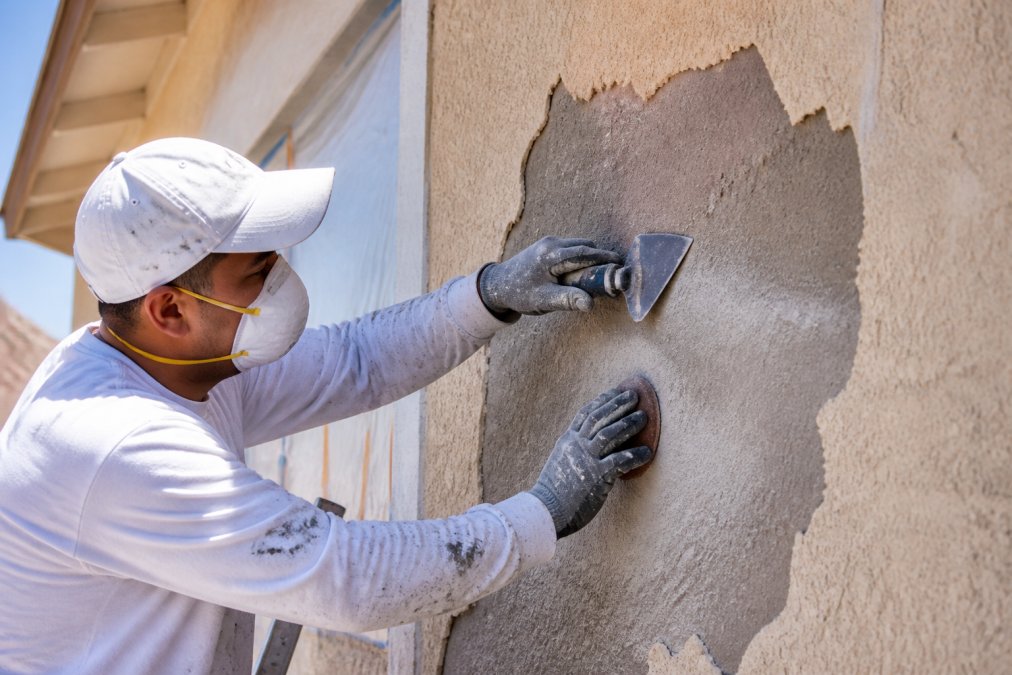
Stucco and Masonry Preparation
Stucco requires specific preparation because it's porous and prone to moisture absorption. Pressure wash at low pressure (below 1500 PSI) to remove loose paint, dirt, and mildew (the CDC). For significant paint failure, use a paint scraper or wire brush to expose solid substrate.
Fill cracks wider than 1/8 inch with elastomeric caulk or stucco patching compound. Allow all patches to cure fully before priming. Apply a primer-sealer designed for masonry, this seals the porous substrate, ensures uniform paint adhesion, and provides alkali resistance. Skip this step and your topcoat will absorb unevenly, resulting in blotchy coverage and reduced durability.
Wood and Metal Substrate Prep
Pressure wash wood at 1200 PSI or less. Sand rough areas and feather edges where old paint is peeling. Check for rot or soft wood, if compromised, it must be replaced before painting. Fill minor surface checking with paintable caulk before priming.
Metal surfaces require aggressive preparation. Remove all rust with a wire brush or chemical rust converter. Bare metal must be primed immediately with a rust-inhibiting metal primer. Allow all surfaces to dry completely before applying primer, typically 24-48 hours after pressure washing.
UV Resistance and Heat-Reflective Technology for Extreme Sun
California's sun breaks down paint binders through photodegradation. Quality exterior paint contains UV-absorbing pigments and stabilizers that protect the binder from radiation damage. Heat-reflective coatings reflect solar radiation rather than absorbing it, reducing surface temperature by 10-15 degrees Fahrenheit and extending paint life significantly while reducing cooling costs (energy.gov).
Pigment selection matters enormously. Synthetic iron oxide pigments deliver excellent color retention and UV resistance without yellowing. Premium exterior paints use pigment blends specifically formulated to resist fading under intense sun exposure. Ask about specific testing standards and real-world performance data before committing to a paint color.
Moisture and Salt Air Protection for Coastal Homes
Coastal properties face salt air corrosion. Salt particles penetrate paint films and reach the substrate, triggering rust and deterioration. The solution requires excellent water repellency, rust inhibitors, corrosion-blocking pigments, and proper primer-sealer that blocks moisture migration.
Elastomeric coatings excel in coastal environments because their thickness and flexibility create superior moisture barriers. Budget acrylic paints lack these features and will blister and peel quickly near salt water. Maintenance becomes critical: rinse painted surfaces with fresh water annually to remove salt deposits. For metal components, use paint with active rust inhibitors. Zinc-rich primers provide sacrificial corrosion protection.
Signs Your Exterior Paint Is Failing and Needs Replacement
Paint failure follows predictable patterns. Catching problems early prevents expensive substrate damage.
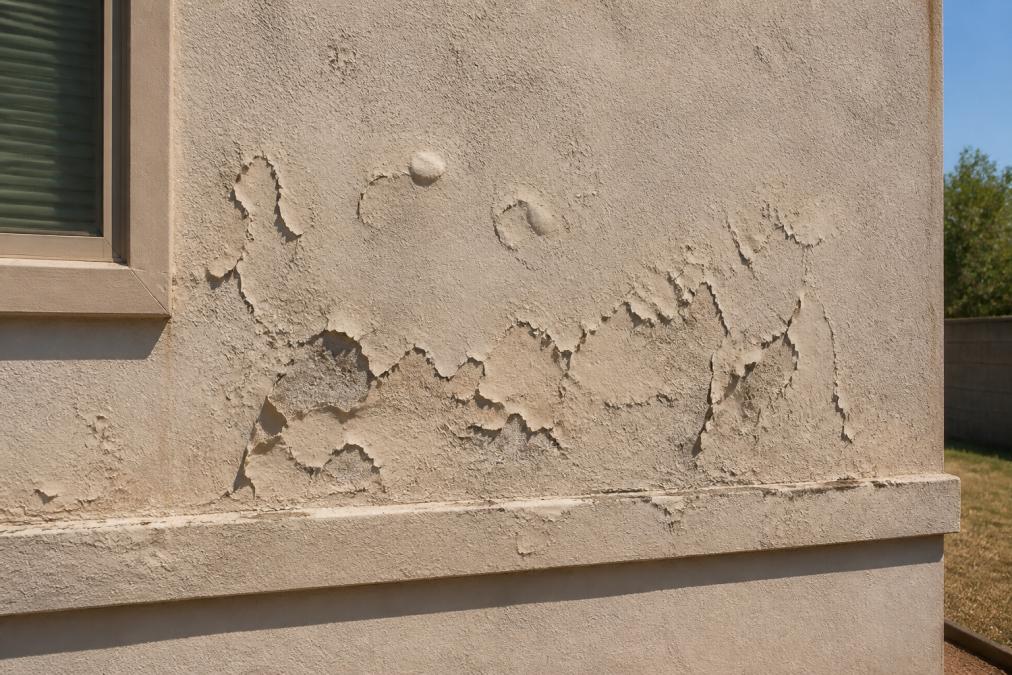
Chalking, Peeling, and Blistering
Chalking appears as fine powder on the paint surface when rubbed. This indicates photodegradation, the paint binder is breaking down. Plan to repaint when chalking becomes visible from a distance.
Peeling indicates adhesion failure. Never paint over peeling paint; scrape back to solid paint or bare substrate first. Blistering happens when moisture becomes trapped between paint and substrate. Heat causes expansion, creating bubbles that burst. Address the moisture source before repainting, or blistering will recur.
Color Fading and Loss of Sheen
Color fading indicates underlying paint degradation and structural failure usually follows within 1-2 years. Loss of sheen signals the paint surface is breaking down, repainting should be scheduled within the next year.
Cost of Exterior House Painting and Budget Planning
Exterior painting costs depend on surface area, substrate condition, surface preparation requirements, paint quality, and local labor rates. Quality exterior paint for California costs more per gallon but lasts 7-10 years or longer, while budget paint requires repainting every 3-5 years (peer-reviewed research). Over 15 years, investing in quality paint upfront saves money.
Surface preparation often surprises homeowners, it can equal or exceed paint and labor costs. Budget explicitly for this rather than assuming it will be minimal. Contact us for a consultation to assess your specific situation.
Top Rated Paint Formulations for 2026
Sherwin-Williams A-100 Exterior Latex is a 100% acrylic formulation engineered for harsh climates with excellent UV resistance, moisture protection, and color retention. Benjamin Moore Aura Exterior combines premium acrylic binders with advanced mildew resistance and UV protection. Behr Premium Plus Ultra is a solid mid-range option that works well for inland California properties with proper surface preparation.
For elastomeric coatings, Elastomeric Systems and Sherwin-Williams Elastomeric Coating are proven performers. Paint selection should be based on your specific situation: substrate type, climate zone within California, and budget constraints.
Exterior paint failure in California isn't inevitable, it's a symptom of using the wrong product or skipping critical preparation steps. The best exterior paint combines 100% acrylic or elastomeric binders with UV-resistant pigments, moisture protection, and proper substrate preparation. California Crews / Painting & Fencing Modesto brings experience selecting and applying paint formulations that survive California's demanding conditions. We handle everything from surface assessment through final inspection. Get a free quote and let our team assess your specific property's needs.
| Paint Type | Best For | Durability | Cost Level |
|---|---|---|---|
| 100% Acrylic | Most California homes | 7-10 years | Mid-range |
| Elastomeric | Older homes, high movement | 10-15 years | Premium |
| Vinyl-Acrylic Blend | Budget projects (not recommended) | 3-5 years | Low |
| Heat-Reflective Acrylic | High-sun areas, energy efficiency | 8-12 years | Mid-premium |
The difference between paint that fails and paint that endures comes down to understanding California's specific environmental stressors and selecting formulations engineered to handle them. Choosing the right paint upfront and preparing surfaces properly prevents years of frustration and expense. California Crews / Painting & Fencing Modesto has helped homeowners make this choice correctly. We assess your property's specific climate zone, substrate condition, and durability needs, then recommend paint formulations with proven track records in California conditions. Schedule a consultation today to learn which paint will deliver the protection your home deserves.
Frequently Asked Questions
Q: What is the best exterior paint for high-UV exposure in California?
A: 100% acrylic latex paints with UV-resistant additives and heat-reflective technology perform best under intense sun. Look for formulations that include alkali-resistant binders and offer color fastness ratings. These paints resist chalking and fading far better than vinyl-acrylic blends. For maximum durability, choose premium exterior grades specifically formulated for desert and high-altitude climates where UV intensity is extreme.
Q: What is the difference between acrylic and elastomeric paint for stucco?
A: 100% acrylic paint bonds strongly to stucco's porous surface and allows proper moisture vapor transmission, preventing blistering. Elastomeric coatings stretch and flex with thermal expansion, making them ideal for stucco that experiences extreme temperature swings. Elastomeric offers superior crack-bridging and waterproofing but costs more. For coastal stucco, acrylic with primer-sealer provides excellent adhesion; for inland stucco with movement, elastomeric prevents peeling and extends finish longevity.
Q: How often should exterior paint be refreshed in California's climate?
A: High-quality 100% acrylic exterior paint typically lasts 7-10 years in coastal areas and 8-12 years inland, depending on sun exposure and maintenance. In extreme heat zones with intense UV, expect repainting every 6-8 years. Regular inspection for chalking, fading, and mildew growth helps identify when refresh is needed. Proper surface preparation and premium formulations extend intervals; neglected surfaces fail faster. Maintenance washing and touch-ups can add 2-3 years to paint life.
Q: Does coastal salt air affect exterior paint longevity?
A: Salt air accelerates corrosion and degrades paint film, reducing durability by 30-40% compared to inland climates. Salt particles penetrate lower-quality coatings and cause blistering, peeling, and substrate corrosion. Paints with mildew resistance, water repellency, and alkali resistance perform better in coastal zones. Elastomeric coatings and 100% acrylic formulations with salt-air protection are essential. Regular washing to remove salt deposits and using quality primer-sealer systems prevent premature failure and extend paint life significantly.
Q: What paint finishes are best for resisting heat and fading?
A: Semi-gloss and gloss sheens offer superior durability, heat resistance, and color retention compared to flat or matte finishes. They reflect more heat and UV rays, reducing substrate temperature and fading. Satin finishes provide a balance of durability and appearance. For extreme heat exposure, consider heat-reflective technology in premium formulations designed for desert climates. Sheen retention matters: premium paints maintain gloss longer, while lower-quality products chalk and lose sheen rapidly under intense sun.
Q: Are there specific paint formulations for extreme temperature fluctuations?
A: Yes. Elastomeric coatings with high elasticity ratings handle thermal expansion and contraction better than rigid acrylic coatings. Look for formulations designed for climates with 40+ degree daily temperature swings. These paints feature flexible binders that stretch without cracking as substrates expand and contract. Premium 100% acrylic paints with alkali resistance and film-build technology also perform well when properly applied. Dual-application systems (primer plus topcoat) improve durability in extreme temperature zones.
Q: What should I look for when choosing exterior paint for California?
A: Prioritize 100% acrylic binders, UV-resistant properties, and heat-reflective technology. Check for mildew resistance, water repellency, and alkali resistance, critical for stucco and masonry. Verify the paint meets VOC compliance standards. Look at durability testing results and color fastness ratings. For coastal homes, salt-air protection is essential. For inland areas, focus on UV resistance and thermal expansion tolerance. Always use a primer-sealer appropriate for your substrate (stucco, wood, metal) to ensure proper adhesion and longevity.
This article was written using GrandRanker
Frequently Asked Questions
Q: What is the best exterior paint for high-UV exposure in California?
A: 100% acrylic latex paints with UV-resistant additives and heat-reflective technology perform best under intense sun. Look for formulations that include alkali-resistant binders and offer color fastness ratings. These paints resist chalking and fading far better than vinyl-acrylic blends. For maximum durability, choose premium exterior grades specifically formulated for desert and high-altitude climates where UV intensity is extreme.
Q: What is the difference between acrylic and elastomeric paint for stucco?
A: 100% acrylic paint bonds strongly to stucco's porous surface and allows proper moisture vapor transmission, preventing blistering. Elastomeric coatings stretch and flex with thermal expansion, making them ideal for stucco that experiences extreme temperature swings. Elastomeric offers superior crack-bridging and waterproofing but costs more. For coastal stucco, acrylic with primer-sealer provides excellent adhesion; for inland stucco with movement, elastomeric prevents peeling and extends finish longevity.
Q: How often should exterior paint be refreshed in California's climate?
A: High-quality 100% acrylic exterior paint typically lasts 7-10 years in coastal areas and 8-12 years inland, depending on sun exposure and maintenance. In extreme heat zones with intense UV, expect repainting every 6-8 years. Regular inspection for chalking, fading, and mildew growth helps identify when refresh is needed. Proper surface preparation and premium formulations extend intervals; neglected surfaces fail faster. Maintenance washing and touch-ups can add 2-3 years to paint life.
Q: Does coastal salt air affect exterior paint longevity?
A: Salt air accelerates corrosion and degrades paint film, reducing durability by 30-40% compared to inland climates. Salt particles penetrate lower-quality coatings and cause blistering, peeling, and substrate corrosion. Paints with mildew resistance, water repellency, and alkali resistance perform better in coastal zones. Elastomeric coatings and 100% acrylic formulations with salt-air protection are essential. Regular washing to remove salt deposits and using quality primer-sealer systems prevent premature failure and extend paint life significantly.
Q: What paint finishes are best for resisting heat and fading?
A: Semi-gloss and gloss sheens offer superior durability, heat resistance, and color retention compared to flat or matte finishes. They reflect more heat and UV rays, reducing substrate temperature and fading. Satin finishes provide a balance of durability and appearance. For extreme heat exposure, consider heat-reflective technology in premium formulations designed for desert climates. Sheen retention matters: premium paints maintain gloss longer, while lower-quality products chalk and lose sheen rapidly under intense sun.
Q: Are there specific paint formulations for extreme temperature fluctuations?
A: Yes. Elastomeric coatings with high elasticity ratings handle thermal expansion and contraction better than rigid acrylic coatings. Look for formulations designed for climates with 40+ degree daily temperature swings. These paints feature flexible binders that stretch without cracking as substrates expand and contract. Premium 100% acrylic paints with alkali resistance and film-build technology also perform well when properly applied. Dual-application systems (primer plus topcoat) improve durability in extreme temperature zones.
Q: What should I look for when choosing exterior paint for California?
A: Prioritize 100% acrylic binders, UV-resistant properties, and heat-reflective technology. Check for mildew resistance, water repellency, and alkali resistance—critical for stucco and masonry. Verify the paint meets VOC compliance standards. Look at durability testing results and color fastness ratings. For coastal homes, salt-air protection is essential. For inland areas, focus on UV resistance and thermal expansion tolerance. Always use a primer-sealer appropriate for your substrate (stucco, wood, metal) to ensure proper adhesion and longevity.