 listicle
Best Exterior Paint for Modesto Weather
Table of Contents
- Why Exterior Paint Selection Matters in Modesto's Climate
- How to Prepare Exterior Walls for Painting
- Acrylic Latex vs. Oil-Based Paint for Central Valley Heat
- Exterior Paint Heat Resistance and UV Protection
- Best Time of Year to Paint Exterior Surfaces
- Top-Performing Exterior Paint Options for Modesto Homes
- Behr Marquee: Maximum Fade and Mildew Resistance
- Sherwin-Williams Emerald Rain Refresh: Self-Cleaning Technology
- Benjamin Moore Aura: Superior Color Retention
- Dunn-Edwards Evershield Ultra: Eco-Friendly Performance
- Valspar Duramax: Flexible Protection Against Cracking
- PPG Permanizer: 100% Acrylic Adhesion and Flexibility
- Finish Selection: Satin, Semi-Gloss, and Flat for Modesto Conditions
- Maintenance Schedule for Exterior Paint in High-Heat Climates
Last Updated: August 27, 2026
Why Exterior Paint Selection Matters in Modesto's Climate
Choosing the right exterior paint for Modesto weather is the difference between a home that looks fresh for years and one that fades and deteriorates within months. The region's intense summer heat (regularly exceeding 95°F) combined with occasional winter moisture creates thermal stress that standard paints cannot handle (noaa.gov). This temperature swing, combined with intense UV radiation and agricultural dust, demands an exterior coating engineered specifically for these conditions.
The best exterior paint for Modesto weather performs in four critical areas: UV resistance to prevent fading, moisture barrier properties to handle winter rains, adhesion strength to resist thermal expansion and contraction, and durability against dust and debris. Selecting a paint that excels in all four categories protects your investment and keeps your home looking vibrant longer.
How to Prepare Exterior Walls for Painting
Surface preparation determines whether premium paint performs or fails. Even the best exterior paint cannot adhere properly to a dirty, damaged, or poorly prepared substrate.
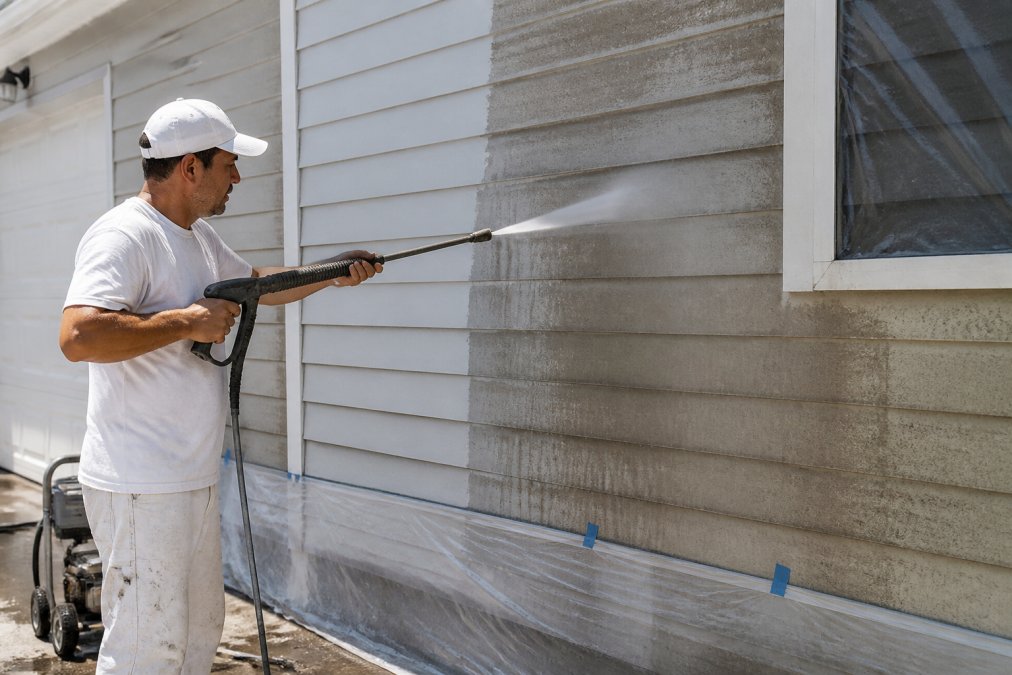
Start by cleaning the entire surface with a pressure washer at 1,500-2,000 PSI to remove accumulated dust, mold, mildew, and chalky paint residue. Allow 48 hours for complete drying before proceeding.
Inspect for damage and scrape off all loose or peeling paint down to solid substrate. Sand rough areas smooth. Fill cracks wider than 1/8 inch with exterior-grade caulk to prevent water infiltration that leads to blistering and peeling. Replace severely damaged boards; for minor surface damage, use exterior wood filler.
Prime bare wood and new repairs with an acrylic latex primer to ensure uniform color coverage and maximum adhesion.
Acrylic Latex vs. Oil-Based Paint for Central Valley Heat
Acrylic latex paints dominate the market for high-heat applications. They dry quickly, emit fewer volatile organic compounds, and offer excellent flexibility, a critical advantage in the Central Valley where daily temperature swings create thermal stress. When paint expands and contracts with temperature changes, flexible acrylic latex resists cracking better than rigid oil-based formulations.
Oil-based paints offer superior adhesion but become increasingly problematic for high-heat applications. They cure slowly, emit strong odors, and become more brittle as they age. In extreme heat, oil-based coatings can blister and peel as moisture trapped beneath tries to escape.
Modern 100% acrylic latex paints (not vinyl-acrylic blends) offer adhesion and durability that rival oil-based products while maintaining the flexibility needed for Modesto's climate. Pure acrylic provides superior UV resistance and color retention under intense sun.
| Paint Type | Flexibility | UV Resistance | Moisture Handling | Best For Modesto |
|---|---|---|---|---|
| 100% Acrylic Latex | Excellent | Excellent | Good | Yes, recommended |
| Vinyl-Acrylic Blend | Good | Good | Fair | Acceptable budget option |
| Oil-Based | Poor | Fair | Poor | Not recommended |
Exterior Paint Heat Resistance and UV Protection
UV resistance separates premium exterior paint from commodity products in Modesto's climate. The region receives approximately 300 days of direct sunlight annually, and without adequate UV protection, paint fades and begins chalking within 2-3 years (ncei.noaa.gov).
Premium acrylic latex formulations use advanced UV-absorbing compounds and stabilizers to maintain color and gloss even under extreme sun exposure. These additives are expensive, which is why budget paints fade faster. The difference becomes visible after one summer: premium paints retain their original color depth while budget paints appear washed out.
Thermal expansion and contraction create stress on the paint film. When surface temperatures exceed 130°F (common in Modesto), the substrate expands (noaa.gov). Quality acrylic latex accommodates this movement because the binder remains flexible even at high temperatures. This is why 100% acrylic formulations outperform vinyl-acrylic blends.
Best Time of Year to Paint Exterior Surfaces
The ideal window for exterior painting in Modesto is late March through early May or September through early November. These periods offer moderate temperatures (60-80°F), low humidity, and low wind. Spring is preferred because it gives the paint maximum curing time before summer heat arrives.
Avoid painting during extreme heat. Application above 85-90°F causes the paint to dry too quickly, leading to poor flow and uneven coverage. The paint film may also cure improperly, creating a weaker finish.
Never paint within 48 hours of rain or when rain is forecast within 12 hours. The paint needs uninterrupted curing time. Avoid painting on days with sustained winds above 15 mph, as dust settles on wet paint, creating a rough, speckled finish.
Top-Performing Exterior Paint Options for Modesto Homes
The following products represent the best exterior paint for Modesto weather based on performance characteristics suited to Central Valley climate conditions.
Behr Marquee: Maximum Fade and Mildew Resistance
Behr Marquee is engineered for premium performance in harsh climates. The paint and primer in one formula simplifies application while delivering exceptional durability. Its advanced dirt and mildew resistance makes it ideal for Modesto, where dust accumulation and occasional moisture create conditions that promote mildew growth. The fade resistance is particularly strong, with minimal color shift even after extended UV exposure.
Pros:
- Exceptional mildew and fade resistance suited to regional climate
- One-coat coverage reduces labor and material costs
- Strong adhesion resists cracking from thermal expansion
Cons:
- Premium pricing reflects advanced formulation
- May require two coats in darker colors despite "one-coat" claim
Sherwin-Williams Emerald Rain Refresh: Self-Cleaning Technology
This paint's self-cleaning technology allows rainwater to sheet off the surface, carrying dirt and dust with it. For Modesto's dusty environment, this feature reduces maintenance and keeps the home looking cleaner longer. The UV and weather protection resists peeling, cracking, and dirt pickup.
Pros:
- Self-cleaning technology reduces maintenance requirements
- Strong UV and weather protection for extreme climates
- Excellent adhesion prevents peeling and cracking
Cons:
- Higher cost reflects advanced self-cleaning technology
- Performance advantage is maintenance-related rather than longevity-related
Benjamin Moore Aura: Superior Color Retention
Benjamin Moore Aura prioritizes color retention through proprietary Color Lock technology. This formulation resists fading better than most competitors, which matters in Modesto where sun intensity is relentless. The paint provides extreme hide and coverage, meaning fewer coats deliver complete color saturation. Aura resists cracking and peeling while adapting to temperature fluctuations.
Pros:
- Superior UV protection and color retention under intense sun
- Exceptional hide and coverage reduce application coats
- Adapts to temperature swings without cracking
Cons:
- Premium pricing reflects advanced formulation
- Requires professional application for optimal results
Dunn-Edwards Evershield Ultra: Eco-Friendly Performance
Dunn-Edwards Evershield Ultra combines premium performance with environmental responsibility. The 100% acrylic formula provides excellent adhesion and flexibility, critical for Modesto's thermal stress. Ultra-low VOC formulation makes it a healthier choice for applicators and surrounding areas. The paint resists fading, chalking, and mildew while maintaining durability in harsh climates.
Pros:
- 100% acrylic provides superior flexibility and adhesion
- Ultra-low VOC is environmentally responsible
- Excellent fade and mildew resistance
Cons:
- May require professional account access for complete pricing information
- Performance is excellent but not differentiated from other premium options
Valspar Duramax: Flexible Protection Against Cracking
Valspar Duramax uses Flex Right Technology to address the thermal stress that causes paint failure in high-heat climates. The paint and primer in one formula reduces application steps. Excellent hide and coverage mean fewer coats deliver complete color saturation. The crack and peel resistance is specifically engineered for surfaces prone to movement.
Pros:
- Flex Right Technology specifically addresses thermal cracking
- Paint and primer combination simplifies application
- Good fade resistance for sunny climates
Cons:
- Specific pricing varies by retailer and seasonal promotions
- Performance is solid but not differentiated from competitors
PPG Permanizer: 100% Acrylic Adhesion and Flexibility
PPG Permanizer is a 100% acrylic latex formulation with exceptional adhesion and flexibility suitable for Modesto's climate. The paint resists blistering, peeling, and fading, the three most common failure modes in high-heat regions. Mildew resistance protects against moisture-related issues during winter.
Pros:
- 100% acrylic provides superior adhesion and flexibility
- Resists blistering and peeling from thermal stress
- Strong mildew resistance for winter moisture
Cons:
- Specific product details and pricing require visiting a local dealer
- Performance is excellent but not differentiated from other premium options
Finish Selection: Satin, Semi-Gloss, and Flat for Modesto Conditions
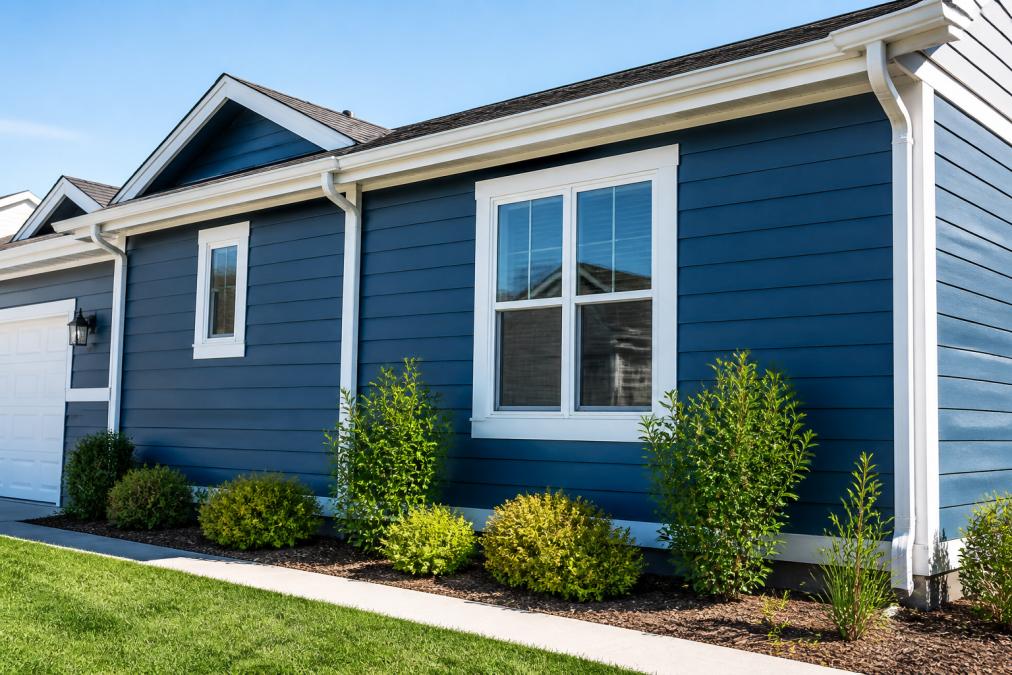
Satin finish is the most popular choice for exterior applications in the Central Valley. It offers a subtle sheen that looks sophisticated while resisting dirt pickup better than flat finishes. Satin helps the paint withstand UV exposure better than flat finishes and is forgiving of minor surface imperfections.
Semi-gloss finishes offer maximum durability and dirt resistance. The higher gloss reflects more UV radiation, potentially extending paint life. Semi-gloss is ideal for trim, doors, and areas that receive direct sun exposure. However, semi-gloss shows imperfections more obviously than satin, requiring meticulous surface preparation.
Flat finishes provide the richest color depth but are the poorest choice for Modesto's climate. Flat finishes trap dirt and dust, requiring frequent cleaning, and offer minimal UV protection compared to satin or semi-gloss.
The practical approach: use satin for main wall surfaces, semi-gloss for trim and south-facing areas, and flat only if necessary for aesthetic reasons on protected surfaces.
Maintenance Schedule for Exterior Paint in High-Heat Climates
Inspect your exterior paint annually, ideally in late summer when UV damage is most apparent. Look for chalking, fading, cracking, peeling, or mildew spots. Early intervention prevents minor issues from becoming major problems.
Clean painted surfaces every 12-18 months using a soft-bristle brush and mild detergent solution. Pressure wash carefully at low pressure (below 1,500 PSI) to avoid damaging the paint film.
Address damage immediately. Small cracks or peeling spots should be scraped, sanded, and spot-painted before they expand. Monitor caulk around trim, windows, and doors, replacing failed caulk every 3-5 years to prevent water infiltration.
Consider repainting every 5-7 years in Modesto. Premium paints may last 7-10 years, while budget paints often fail within 3-5 years. The region's intense UV exposure and temperature swings accelerate paint degradation compared to milder climates.
Selecting the best exterior paint for Modesto weather requires understanding how the region's climate stresses paint coatings. The intense UV exposure, temperature swings, dust accumulation, and occasional moisture create conditions that demand premium acrylic latex formulations with advanced UV protection and flexibility. Proper surface preparation and maintenance extend paint life significantly. Contact California Crews / Painting & Fencing Modesto for professional exterior painting that uses quality materials engineered for Central Valley conditions.
=== FAQ ANSWERS (audit these too, same rules) ===
[1] Q: What type of exterior paint is best for extreme heat and sun exposure? A: Acrylic latex paints with 100% acrylic binders perform best in high-heat environments. Look for formulations with UV-resistant pigments and fade-protection technology. Behr Marquee, Benjamin Moore Aura, and PPG Permanizer are specifically designed to resist chalking and color loss under intense sun. These all-acrylic options also have superior flexibility to handle thermal expansion and contraction without cracking.
[2] Q: Can you paint an exterior in 100-degree weather? A: Most exterior paints should not be applied above 85-90 degrees Fahrenheit. At 100 degrees, paint dries too quickly, causing poor adhesion, lap marks, and uneven coverage. If temperatures exceed 85 degrees, paint early morning or late afternoon when it's cooler. Sherwin-Williams Latitude with ClimateFlex Technology is one option designed for wider temperature ranges, but even it performs best below 90 degrees.
[3] Q: How often should you repaint exterior surfaces in Modesto's climate? A: Quality exterior paint typically lasts 7-10 years in Modesto's climate. The combination of intense summer heat, agricultural dust, and winter moisture accelerates degradation. High-performance paints like Behr Marquee or Benjamin Moore Aura may extend this to 10-12 years. Inspect annually for chalking, peeling, or fading. Maintenance such as cleaning and touch-ups can extend the interval between full repaints.
[4] Q: What finish should I choose for exterior paint in high-heat areas? A: Satin finish is ideal for high-heat environments because it resists dust and dirt pickup while offering better durability than flat finishes. Semi-gloss provides even more protection and is excellent for trim, doors, and areas exposed to intense sun. Flat finishes hide imperfections but trap dust and require more frequent cleaning in Modesto's dusty conditions. Satin offers the best balance of aesthetics and performance for most exterior applications.
Frequently Asked Questions
What type of exterior paint is best for extreme heat and sun exposure?
Acrylic latex paints with 100% acrylic binders perform best in high-heat environments. Look for formulations with UV-resistant pigments and fade-protection technology. Behr Marquee, Benjamin Moore Aura, and PPG Permanizer are specifically designed to resist chalking and color loss under intense sun. These all-acrylic options also have superior flexibility to handle thermal expansion and contraction without cracking.
Can you paint an exterior in 100-degree weather?
Most exterior paints should not be applied above 85-90 degrees Fahrenheit. At 100 degrees, paint dries too quickly, causing poor adhesion, lap marks, and uneven coverage. If temperatures exceed 85 degrees, paint early morning or late afternoon when it's cooler. Sherwin-Williams Latitude with ClimateFlex Technology is one option designed for wider temperature ranges, but even it performs best below 90 degrees.
How often should you repaint exterior surfaces in Modesto's climate?
Quality exterior paint typically lasts 7-10 years in Modesto's climate. The combination of intense summer heat, agricultural dust, and winter moisture accelerates degradation. High-performance paints like Behr Marquee or Benjamin Moore Aura may extend this to 10-12 years. Inspect annually for chalking, peeling, or fading. Maintenance such as cleaning and touch-ups can extend the interval between full repaints.
What finish should I choose for exterior paint in high-heat areas?
Satin finish is ideal for high-heat environments because it resists dust and dirt pickup while offering better durability than flat finishes. Semi-gloss provides even more protection and is excellent for trim, doors, and areas exposed to intense sun. Flat finishes hide imperfections but trap dust and require more frequent cleaning in Modesto's dusty conditions. Satin offers the best balance of aesthetics and performance for most exterior applications.
This article was written using GrandRanker
Frequently Asked Questions
What type of exterior paint is best for extreme heat and sun exposure?
Acrylic latex paints with 100% acrylic binders perform best in high-heat environments. Look for formulations with UV-resistant pigments and fade-protection technology. Behr Marquee, Benjamin Moore Aura, and PPG Permanizer are specifically designed to resist chalking and color loss under intense sun. These all-acrylic options also have superior flexibility to handle thermal expansion and contraction without cracking.
Can you paint an exterior in 100-degree weather?
Most exterior paints should not be applied above 85-90 degrees Fahrenheit. At 100 degrees, paint dries too quickly, causing poor adhesion, lap marks, and uneven coverage. If temperatures exceed 85 degrees, paint early morning or late afternoon when it's cooler. Sherwin-Williams Latitude with ClimateFlex Technology is one option designed for wider temperature ranges, but even it performs best below 90 degrees.
How often should you repaint exterior surfaces in Modesto's climate?
Quality exterior paint typically lasts 7-10 years in Modesto's climate. The combination of intense summer heat, agricultural dust, and winter moisture accelerates degradation. High-performance paints like Behr Marquee or Benjamin Moore Aura may extend this to 10-12 years. Inspect annually for chalking, peeling, or fading. Maintenance such as cleaning and touch-ups can extend the interval between full repaints.
What finish should I choose for exterior paint in high-heat areas?
Satin finish is ideal for high-heat environments because it resists dust and dirt pickup while offering better durability than flat finishes. Semi-gloss provides even more protection and is excellent for trim, doors, and areas exposed to intense sun. Flat finishes hide imperfections but trap dust and require more frequent cleaning in Modesto's dusty conditions. Satin offers the best balance of aesthetics and performance for most exterior applications.