 listicle
Commercial Painting Services: A Guide
Table of Contents
- What Commercial Painting Services Include
- Commercial Painting Project Timeline: What to Expect
- Hiring a Licensed Painting Contractor
- Commercial Exterior Painting Cost Factors
- Why Professional Contractors Matter for Commercial Properties
- Sustainability and Eco-Friendly Coating Options
- Requesting a Free Estimate and Next Steps
- Frequently Asked Questions
Last Updated: September 18, 2026
What Commercial Painting Services Include
Professional commercial painting services deliver expertise in surface preparation, material selection, and application techniques that protect your investment for years.
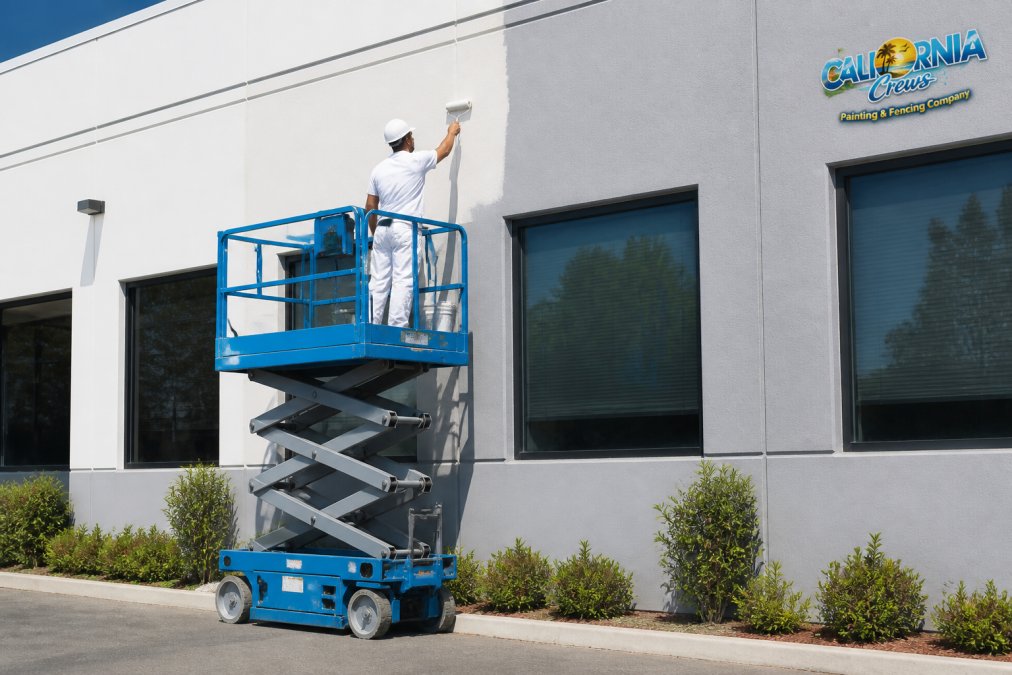
California Crews / Painting & Fencing Modesto handles interior and exterior painting.
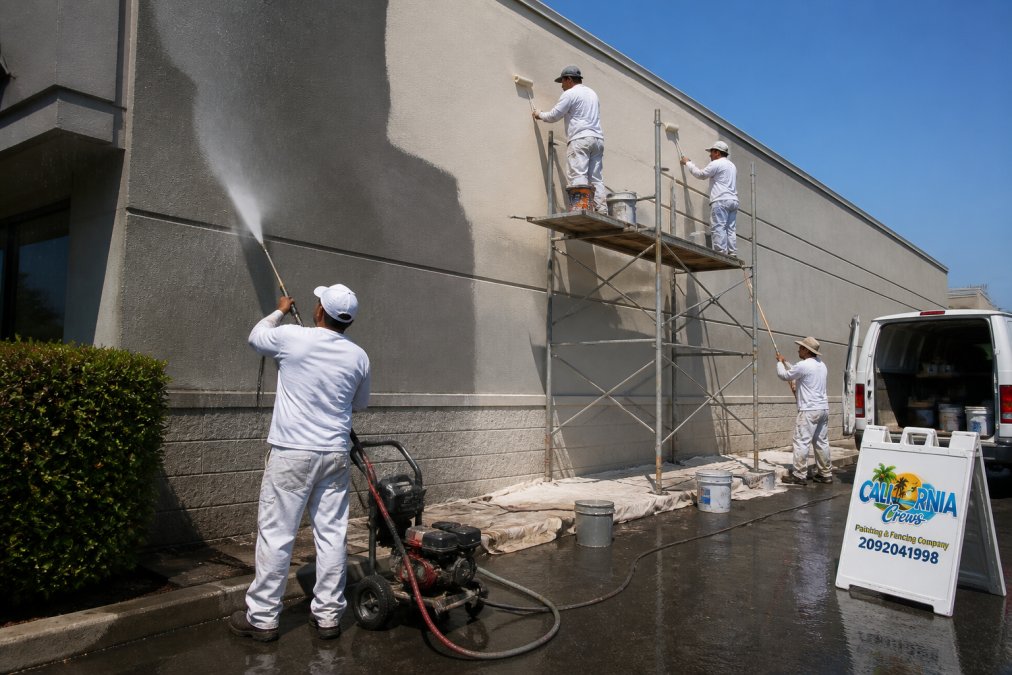
Interior and Exterior Painting
Interior commercial painting requires selecting paints that withstand high-traffic areas, resist staining, and maintain appearance while minimizing disruption to ongoing business operations.
Exterior painting demands precision planning for weather exposure and surface deterioration. A licensed contractor assesses conditions, recommends appropriate coatings, and executes work with minimal operational impact.
Industrial Coatings and Protective Systems
Industrial coatings protect metal, concrete, and specialized surfaces from corrosion and chemical exposure using engineered systems like epoxy primers, polyurethane topcoats, or specialized formulations.
Warehouse floors, manufacturing equipment, storage tanks, and structural steel perform better when properly coated. The application process requires specific equipment, environmental controls, and technical knowledge.
Professional contractors understand cure times, temperature requirements, and surface preparation standards that generic services miss. Cutting corners creates expensive problems.
Concrete Coating and Floor Finishing
Epoxy flooring is standard for warehouses, manufacturing facilities, retail spaces, and commercial kitchens because it resists staining, handles heavy traffic, and simplifies cleaning.
Proper surface preparation, moisture testing, grinding, and cleaning, must precede coating application. Skipping these steps causes premature failure and liability.
Professional floor finishing includes edge work, expansion joint treatment, and protective topcoats that extend floor life and maintain appearance.
Commercial Painting Project Timeline: What to Expect
Most commercial painting projects follow a predictable sequence, though timeline varies based on property size, surface condition, and complexity.
Pre-Project Site Assessment
A professional contractor conducts a thorough site assessment evaluating surface condition, moisture levels, and preparation requirements, plus logistics like access points and operational impact.
Assessment typically takes 1-2 days.
Surface Preparation and Planning
Surface preparation includes power washing, sanding, scraping, filling cracks, and sometimes grinding or chemical stripping, depending on existing conditions.
Surface prep typically takes 3-7 days for most properties.
The contractor schedules material delivery, arranges equipment, coordinates with your operations team, and plans for weather requirements.
Application and Curing
Paint application typically takes 3-5 days depending on square footage and coating type.
Curing time varies: standard latex paints cure in 24-48 hours; epoxy and polyurethane coatings require 5-7 days.
Hiring a Licensed Painting Contractor
Choosing the right contractor determines project success. The differences between one-person operations and established firms matter significantly for commercial work.
Verify Licensing and Insurance
Professional commercial painting contractors must hold a valid state contractor's license. Ask for proof and verify independently through your state's licensing board, do not rely on the contractor's documentation alone.
Confirm the contractor holds a license classification covering painting services. Some states distinguish between residential and commercial licenses or require endorsements for industrial coatings. Residential-only licensing may lack credentials for commercial projects.
Commercial painting requires two insurance types: General Liability Insurance ($1 million per occurrence, $2 million aggregate minimum) protecting against injury or property damage, and Workers' Compensation Insurance covering contractor employees.
Request certificates of insurance and verify coverage amounts. Call the carrier directly to confirm active policies. A contractor unable to produce current documentation should be eliminated immediately.
Understand Bonding Requirements
For projects exceeding $25,000-$50,000, bonding provides protection. A performance bond guarantees completion; a payment bond ensures subcontractors and suppliers are paid, protecting you from liens.
Ask whether the contractor carries bonding capacity and cost for your project. Bonding adds 1-3% to project cost but provides significant protection.
Check References and Past Work
Ask for at least three recent commercial references from similar projects. Contact them directly and ask whether the contractor stayed on schedule, maintained the property, handled unexpected costs, managed operational disruptions, met expectations, and would be hired again.
Request a portfolio of similar past work. Photos show quality standards and demonstrate understanding of your specific challenges.
Site visits to past projects reveal actual quality, edge work, trim details, and property manager experience. Inspect surface preparation quality and protective measures.
Safety Protocols and Compliance
Professional contractors follow safety protocols and understand OSHA compliance, especially for industrial applications or work at height.
Ask about equipment inspection, worker training in fall protection and hazardous materials, incident reporting, toxic material handling, and environmental compliance practices.
Safety prioritization demonstrates professionalism and affects your liability. Cutting corners creates business risk and regulatory exposure.
For work at height, confined spaces, or hazardous materials, ask about OSHA certifications or specialized training.
Evaluate Communication and Project Management
A contractor's communication during estimate and planning predicts project management. Professional contractors provide detailed written estimates and explain their approach clearly.
Expect regular communication about progress, discovered issues, and timeline adjustments. Informed contractors prevent surprises and respect business operations.
Ask how they coordinate with your operations team, handle changes, and address quality concerns. Clear answers indicate experience managing complex projects.
Commercial Exterior Painting Cost Factors
Several factors influence commercial painting services cost. Understanding these variables helps you evaluate quotes and budget accurately.
Square Footage and Property Size
Square footage is the primary cost driver. Contractors typically bid based on square footage, adjusting for specific conditions.
A simple rectangular building costs less per square foot than one with complex architectural details, multiple angles, or difficult access points.
Surface Condition and Preparation Needs
Well-maintained surfaces needing light prep cost less than those requiring extensive repair. Cracked concrete, peeling paint, rust, or structural damage increase preparation time and complexity.
Preparation typically represents 40-60% of total project cost. Sound surfaces need only power washing and patching; failed coatings, rust, or moisture damage require grinding, chemical stripping, or structural repair, potentially doubling prep costs.
Moisture issues must be addressed before coating or paint will fail. Moisture testing should happen during estimate. Addressing the source, drainage, vapor barriers, or structural repairs, becomes a separate line item.
Removing industrial-grade epoxy requires more aggressive prep than standard latex paint.
Material Quality and Coating Type
Premium coatings cost more but deliver better durability and appearance. Budget-grade paints require more frequent repainting.
Material costs typically represent 20-35% of total project cost.
Specialized coatings deliver measurable value: epoxy floors last 5-10 years versus 2-3 years for cheaper options; polyurethane topcoats provide superior corrosion protection; moisture-resistant primers prevent failure in damp conditions.
Professional contractors recommend materials matched to your application. The cheapest option often costs more over time due to premature failure and liability.
Labor Rates and Project Timeline
Labor costs depend on project complexity, crew size, and local rates. Straightforward exterior work costs less than projects requiring scaffolding or detailed interior finish work.
Timeline affects labor cost directly. A 2-week project costs less than a 6-week project. Expedited timelines requiring larger crews increase hourly labor costs.
Rushing a project may require premium labor rates or larger crews, increasing total cost. Realistic prep time and weather buffers often reduce overall expense.
Access and Logistical Complexity
Access challenges increase costs. Scaffolding, lift equipment, or specialized access solutions add equipment rental and setup time.
Operational coordination factors into cost. Keeping business open during painting may require phased work, protective barriers, or off-hours scheduling.
Why Professional Contractors Matter for Commercial Properties
Professional contractors bring expertise that protects your investment and ensures work performs as intended.
Licensed contractors understand surface preparation, material compatibility, application techniques, and environmental conditions. They carry insurance, follow safety protocols, and warranty their work.
Professional installations maintain appearance and protective function. Poor installations fail prematurely, requiring costly repairs.
Sustainability and Eco-Friendly Coating Options
Low-VOC paints, water-based coatings, and environmentally certified products are now standard options for many applications.
Low-VOC paints reduce indoor air quality impacts and are safer for workers. They perform comparably to traditional paints while reducing environmental impact.
Water-based epoxies and polyurethanes provide environmental benefits while maintaining durability for industrial and floor applications.
| Coating Type | Environmental Impact | Best Applications | Performance |
|---|---|---|---|
| Low-VOC Latex | Minimal emissions | Interior office, retail | Good durability |
| Water-Based Epoxy | Reduced VOC | Floors, industrial | Excellent durability |
| Traditional Epoxy | Higher VOC | Demanding environments | Superior durability |
| Polyurethane | Variable by type | Metal, protective | Excellent protection |
Requesting a Free Estimate and Next Steps
Accurate quotes require detailed project information. Professional contractors assess your property, understand your timeline, and identify specific requirements.
Frequently Asked Questions
What is the difference between residential and commercial painting?
Commercial painting involves larger-scale projects, stricter timelines, industrial-grade materials, and coordination with business operations. Residential work focuses on smaller properties with less complex scheduling. Commercial projects often require licensed contractors, compliance with building codes, and specialized equipment for warehouses, retail spaces, and office buildings.
What should I look for in a commercial painting contractor's license?
Verify that contractors hold a valid state contractor's license, carry liability insurance, and maintain workers' compensation coverage. Ask for proof of licensing and check that their license is active and in good standing. Licensed professionals understand building codes, safety regulations, and can handle permit requirements, protecting you from liability and ensuring quality work.
How long does a typical commercial painting project take?
Timelines depend on project scope, surface preparation needs, and property size. Small interior projects may take 1-2 weeks, while large exterior jobs can span 4-8 weeks or longer. Professional contractors provide detailed schedules during the estimate phase, accounting for weather, surface condition, and drying times between coats.
How often should a commercial building be repainted?
Interior spaces typically need repainting every 3-5 years depending on foot traffic and wear. Exterior surfaces generally require repainting every 5-7 years, though durability depends on climate, coating quality, and maintenance. Regular inspections help identify peeling, fading, or damage that signals it's time for a refresh to maintain curb appeal and protect the building.