 blog
blog
Fence Installation Companies Near Me: 2026 Guide
Table of Contents
- What Fence Installation Companies Near Me Actually Do
- Fence Materials and Design: Wood, Vinyl, Chain Link, and More
- Average Cost of Wood Fence Installation and What Drives the Quote
- How to Choose a Fence Contractor Without Getting Burned
- Permits, Property Lines, and HOA Approval: A Step-by-Step Walkthrough
- DIY vs. Professional Fence Installation: A Cost-Benefit Breakdown
- Wood Fence Maintenance Tips for Central Valley Heat and Clay Soil
- Frequently Asked Questions
Last Updated: September 20, 2026
What Fence Installation Companies Near Me Actually Do
Searching for fence installation companies near me usually means you want a fence that stands straight for years, not a weekend project that leans by spring. At California Crews / Painting & Fencing Modesto, we handle wood fence contracting and exterior painting for homeowners and property managers across the Central Valley, so we see both sides of that equation.
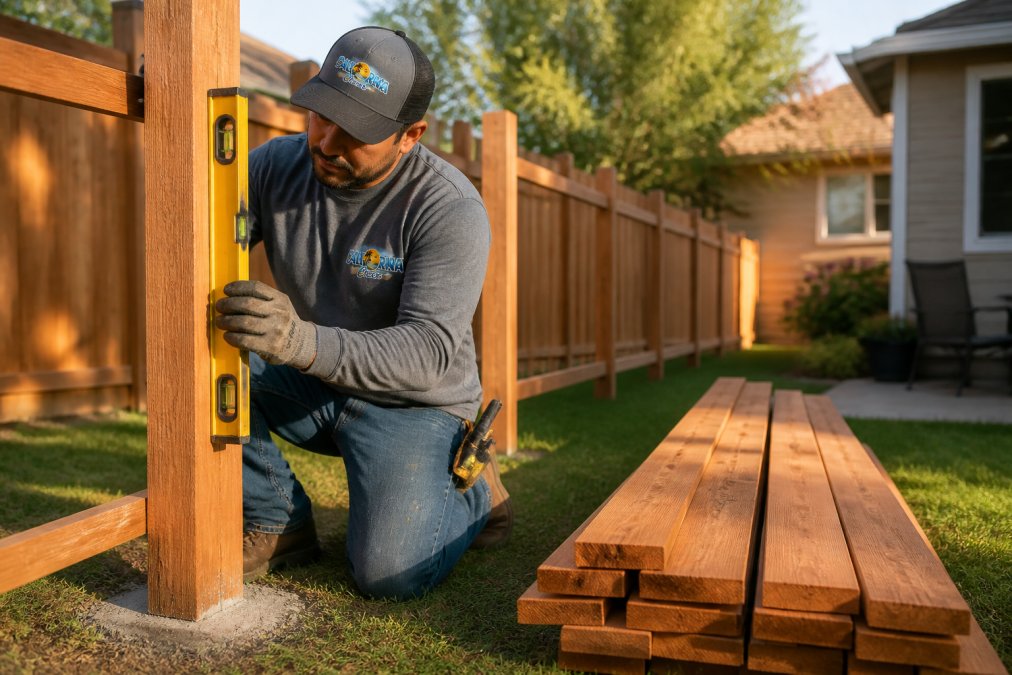
From Site Assessment to Final Walkthrough
The work starts before anyone touches a shovel. A good installer walks the property, checks soil conditions, and measures the actual fence line against your plat map. Then the sequence runs like this:
- Site assessment and measurement of the full run
- Locating property lines and checking for utility markings
- Post setting with concrete footings set below the frost line
- Panel or picket attachment, plus gate installation and hardware
- Final walkthrough with the homeowner
Fence Materials and Design: Wood, Vinyl, Chain Link, and More
Material choice drives cost, maintenance, and lifespan more than any other decision. Each option trades upfront price against long-term upkeep.
Wood Fencing
Wood remains the most common choice for privacy fence and picket fence projects. Cedar and redwood resist rot and insects better than softer species. Pressure-treated pine costs less but needs more attention over time. Wood suits nearly any fence design, and it can be stained or painted to match a home's exterior.
Vinyl, Chain Link, and Wrought Iron or Aluminum
Vinyl fencing holds color without painting and shrugs off moisture, though it can crack in extreme temperature swings. Chain link is the budget option for pet containment and security, and it's the fastest to install. Wrought iron and aluminum fencing deliver curb appeal and security for commercial fencing and front-yard applications, but they cost more per linear foot.
| Material | Best For | Maintenance Level | Climate Note |
|---|---|---|---|
| Wood | Privacy, custom design | Moderate to high | Needs sealing in dry heat |
| Vinyl | Low-upkeep yards | Low | Can crack in temperature swings |
| Chain link | Pets, security, budgets | Low | Rusts if coating fails |
| Aluminum or iron | Curb appeal, security | Low | Holds up well in heat |
Average Cost of Wood Fence Installation and What Drives the Quote
Most guides dodge this question. Pricing depends on wood species, height, terrain, and gate count, so a fence installation company will quote after a site assessment. Cedar and redwood cost more than pressure-treated pine, and sloped yards or rocky soil add labor.
- Linear footage. Setup, mobilization, and equipment rental are fixed costs. Spread them across 200 feet instead of 80, and the per-foot price drops noticeably. Most contractors have a minimum job size, often 50 to 100 feet, below which the per-foot price climbs sharply.
- Material grade and species. Pressure-treated pine is the budget baseline. Cedar and redwood resist rot and insects naturally and cost more. Composite and vinyl run higher still. Ask for the quote broken out by material line item so you can see what you're actually paying for.
- Terrain, soil, and access. Sloped ground requires stepped or racked panels and more post depth. Rocky soil can require a rock auger or hand-digging around obstructions. Tight side yards where a mini-skid can't fit slow the crew to wheelbarrow pace. Each of these adds labor hours, and labor is typically 40-60% of the total bill.
- Gates, removal, and disposal. A walk gate adds roughly the cost of 4-6 linear feet of fence plus hardware. A drive gate can add several hundred dollars or more. Hauling away an old fence usually runs a per-foot disposal fee on top of the removal labor.
What a Written Estimate Should Actually Contain
A real estimate is not a single number on a business card. It should list linear footage, post spacing (typically 6 to 8 feet on center), post depth and footing type, material species and grade, gate count and hardware, permit responsibility, removal and disposal, and a payment schedule.
The Cost Factors Nobody Puts in the Ad
Two costs consistently surprise homeowners. First, permit fees vary widely by jurisdiction, some municipalities charge a flat fee under $100, others base it on project valuation and can run several hundred dollars. Second, property line surprises: if a survey reveals the fence line you assumed is wrong, you may be paying for a survey, a re-design, or a conversation with a neighbor before a single post goes in.
How to Choose a Fence Contractor Without Getting Burned
The best fence contractor answers three questions before you ask: who's licensed, who's insured, and who pulls the permit. Get those in writing.
Verify Licensed and Insured Status
Ask for the license number and verify it with your state licensing board. Then request a certificate of insurance for both general liability and workers' compensation. If a crew member gets hurt on your property and the contractor has no coverage, the claim can land on your homeowner's policy.
Read Customer Reviews and Ask for References
Customer reviews reveal patterns a single conversation won't. Look for repeated complaints about timelines, cleanup, or surprise charges. Then ask for two or three references from jobs completed at least a year ago, so you can hear how the fence has held up.
Permits, Property Lines, and HOA Approval: A Step-by-Step Walkthrough
This is the part of fence installation that intimidates people most, and it's the part most guides skip past with a vague "check local regulations." Here's the actual sequence, with the specifics that matter.
Step 1: Confirm the Property Line Before Anything Else
Pull your plat map or survey from your county recorder's office or the packet you received at closing. If you don't have one, a licensed land surveyor can re-establish the line, typically for a few hundred dollars on a standard residential lot. Do not rely on the existing fence as proof of the property line, fences are frequently off by a foot or more, and building on a neighbor's land creates a legal problem that costs far more to fix than a survey.
Step 2: Call 811 Before You Dig
Call 811 or submit a request online at least two to three business days before excavation. Utility locators will mark gas, electric, water, sewer, and communications lines on your property at no cost. This is required by law in every state, and it's the single cheapest insurance policy on the project.
Step 3: Read Your Local Zoning Code
Fence height and setback rules are set at the municipal or county level, not the state level, so they vary block to block in some metro areas. The general pattern across most U.S. jurisdictions:
- Front yard: often capped at 3-4 feet, and sometimes restricted to "open" styles like picket or wrought iron so sight lines aren't blocked.
- Side and rear yards: commonly allowed up to 6 feet, with 8 feet sometimes permitted behind the rear building line.
- Corner lots: frequently have a "sight triangle" at the intersection where fences must stay low or be set back further.
- Setbacks: many codes require the fence to sit a certain distance inside the property line, and some require the finished side (the "good" side) to face outward toward neighbors.
Step 4: Submit the Permit Application
Most jurisdictions require a permit for any fence over a certain height, commonly 6 feet, sometimes lower in front yards. The application usually needs:
- A site plan or plot plan showing the fence line, height, and material
- Property owner information and the contractor's license number
- Sometimes a drawing of the fence style and post spacing
Step 5: Get HOA Approval in Writing
If you live in a neighborhood with a homeowners association, its architectural review committee usually has its own rules that are stricter than the city's. Common HOA requirements include approved material lists, color restrictions, height caps lower than the municipal limit, and prohibitions on chain link in visible areas.
Step 6: Schedule Installation After Both Approvals Are in Hand
Do not let a crew break ground until the permit is issued and the HOA approval is documented. Installing first and permitting later is the most common, and most expensive, mistake homeowners make. If a neighbor complains or an inspector drives by, you can be required to remove the fence at your own cost, and unpermitted work often surfaces during a home sale and delays closing.
What Happens If You Skip the Permit
The consequences are not theoretical. Municipalities can issue stop-work orders, fines that accrue daily, and in some cases require full removal of the fence. Title companies and buyers' lenders frequently flag unpermitted structures during a sale, and the seller ends up paying for retroactive permitting or demolition.
DIY vs. Professional Fence Installation: A Cost-Benefit Breakdown
Professional installation costs more upfront, but the gap narrows once you count tools, time, and rework. A DIY build saves labor but requires an auger, a level, and the knowledge to set posts correctly.
Wood Fence Maintenance Tips for Central Valley Heat and Clay Soil
Wood fence maintenance tips matter more here than in milder climates. Central Valley heat bakes moisture out of boards, and clay soil expands and contracts with the seasons, working posts loose over time.
- Seal or stain wood every two to three years to slow cracking and fading.
- Inspect posts each spring for leaning or rot at the soil line.
- Re-tighten gate hardware seasonally as wood shrinks.
- Keep soil and irrigation away from post bases to limit moisture damage.
- Replace cracked boards early so water doesn't reach the rails.
Frequently Asked Questions
What is the average cost to install a wood fence per linear foot?
Pricing depends on wood species, height, terrain, and gate count, so a fence installation company will quote after a site assessment. Cedar and redwood cost more than pressure-treated pine, and sloped yards or rocky soil add labor. Request at least three itemized quotes and confirm whether removal of the old fence, post setting, and staining are included. California Crews provides free in-home consultations with written estimates.
How do I verify if a fence installation company is licensed and insured?
Ask for the contractor's license number and check it through your state's licensing board website, then request a certificate of insurance showing general liability and workers' compensation coverage. Call the insurer directly to confirm the policy is active. A legitimate company will send these without hesitation. If a contractor dodges the request or offers only a handwritten receipt, walk away and keep looking.
Do I need a building permit for residential fence installation?
Most cities and counties require a permit for fences over a certain height, often six feet, and rules vary by jurisdiction. HOAs usually add their own approval process on top of the city permit. Before any work starts, confirm height limits, setback requirements from property lines, and whether a survey is needed. A reputable installer will handle the paperwork or walk you through it.
How long does a professional wood fence installation typically take?
A typical residential wood fence of 150 to 200 linear feet takes two to four days once materials arrive and permits are approved. Factors that extend the timeline include removing an old fence, digging through rocky or clay-heavy soil, adding gates, and scheduling around rain. Ask for a written installation timeline with your quote so you know what to expect and when final payment is due.
Fence installation rewards planning more than speed. The homeowners who avoid problems verify licensing, pull permits early, and choose materials that match the climate. California Crews / Painting & Fencing Modesto handles wood fence contracting and exterior painting for residential and commercial properties, from site assessment through final walkthrough. Get started with California Crews / Painting & Fencing Modesto and request a free in-home consultation for your fence project.