 ultimate-guide
Residential Fence Installation Services: A 2026 Guide
Table of Contents
- What to Expect From Residential Fence Installation
- Types of Fencing Materials and Their Durability
- Fence Replacement Cost Breakdown 2026
- Average Cost Per Linear Foot for Wood Fence
- Wood Fence Maintenance Tips for Long-Term Protection
- Permitting, HOA Rules, and Local Building Codes
- Choosing a Fence Contractor: What Matters Most
- Fence Repair vs. Full Replacement: When to Choose Each
- Frequently Asked Questions
Last Updated: August 31, 2026
What to Expect From Residential Fence Installation
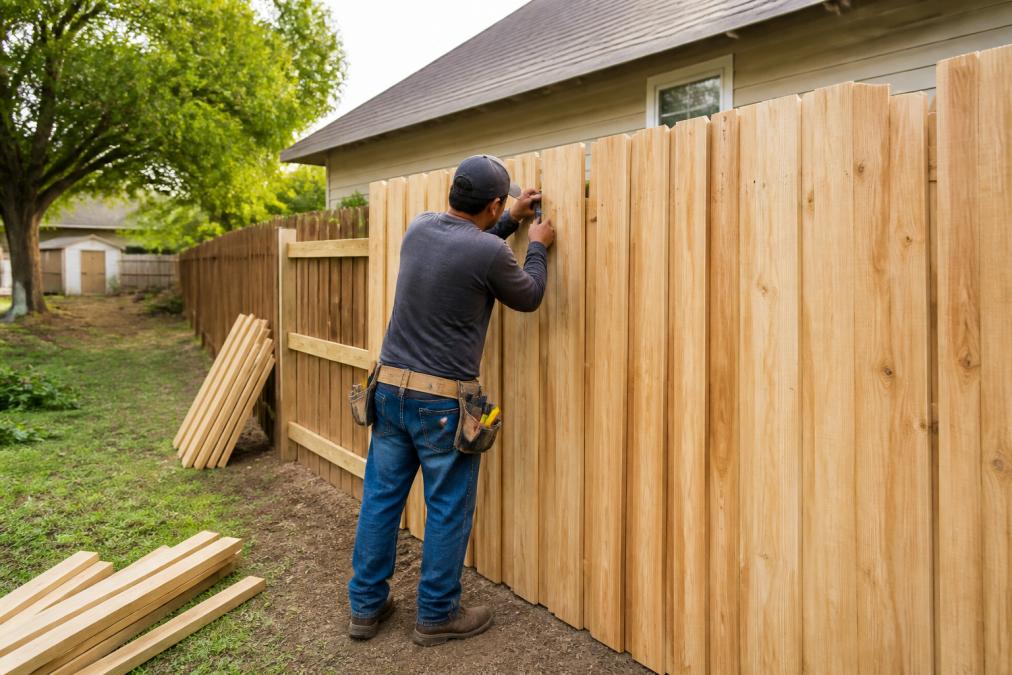
Residential fence installation is the process of building a new fence structure on your property, from design through final installation and site cleanup. When you hire a contractor, you're investing in a project that typically spans 1-3 weeks depending on fence length and material choice.
The process begins with a site assessment. A professional contractor will inspect your property lines, identify any underground utilities, and discuss your goals, privacy, security, curb appeal, or a combination. This is when questions about local building codes, HOA restrictions, and permit requirements arise. A fence that violates local setback rules or HOA guidelines can be ordered removed, costing you twice.
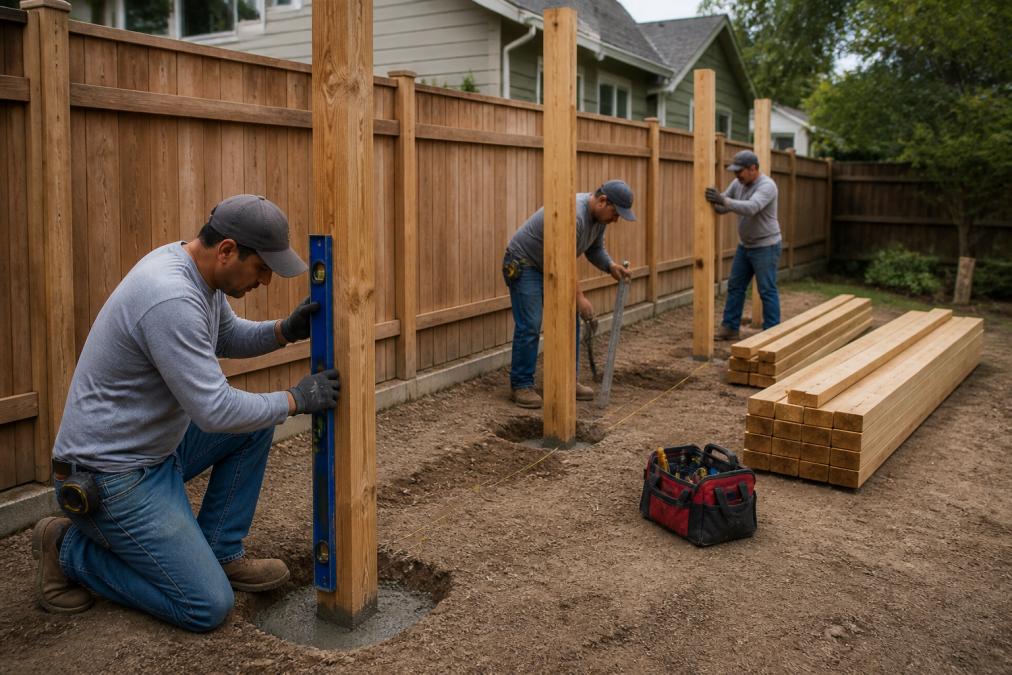
At California Crews / Painting & Fencing Modesto, we handle the entire process: site preparation, material sourcing, installation, and cleanup. The work involves digging post holes to proper depth (typically 2-3 feet), setting posts in concrete footings for stability, attaching rails and panels, and finishing touches like gates or decorative elements. Quality installation means your fence will resist settling, warping, and premature failure, especially critical in the Central Valley climate where temperature swings and soil conditions stress materials year-round.
A typical residential fence installation for a property with 150-200 linear feet takes 3-5 working days, weather permitting. Before work starts, expect the contractor to pull permits if required, mark utility locations, and schedule inspections at key stages.
Types of Fencing Materials and Their Durability
Your material choice determines how long your fence lasts, how much maintenance it needs, and how it performs in local conditions. Wood, vinyl, and chain-link dominate residential installations, each with distinct strengths and trade-offs.
Wood Fencing for Central Valley Conditions
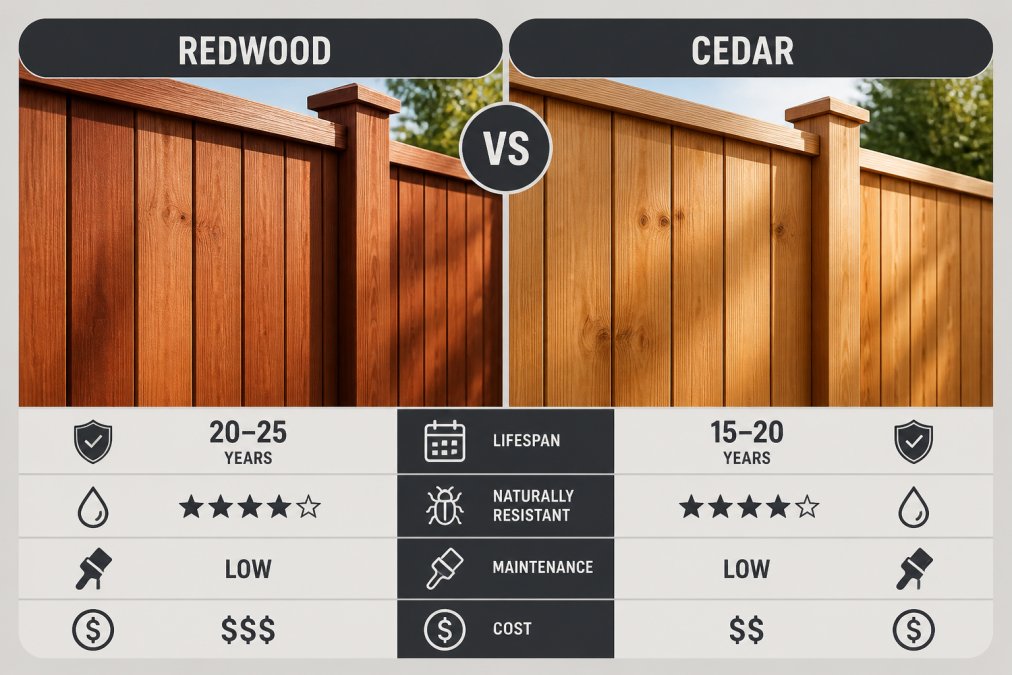
Wood fencing remains the most popular choice for residential properties because it offers aesthetic appeal, customization, and reasonable durability when built correctly. Redwood and cedar are the preferred species for the Central Valley climate, both resist rot and insect damage better than pine or fir due to natural oils that protect against moisture and decay.
Wood fence styles include privacy fences (solid panels, typically 6-7 feet tall), board-on-board designs (overlapping boards for extra privacy), picket fences (traditional, decorative), and ranch rail (open, rustic). Privacy fences block views but require regular maintenance. Picket fences need less frequent upkeep but offer no privacy.
A properly installed wood fence with concrete footings and quality hardware can last 15-20 years in the Central Valley (peer-reviewed research). Without regular staining, sealing, and repairs, wood deteriorates faster, sometimes within 8-10 years. The dry summers and occasional freeze-thaw cycles accelerate wood aging if protective coatings aren't maintained.
Vinyl and Chain-Link Options
Vinyl fencing requires minimal maintenance. Unlike wood, vinyl doesn't rot, splinter, or need staining. It resists insects and weather well, making it a low-effort choice for busy homeowners. Vinyl comes in white, tan, and wood-grain finishes. The trade-off: vinyl costs more upfront than wood, and modern formulations handle Central Valley temperatures reasonably well.
Chain-link fencing is the most affordable option, commonly used for security, pet containment, and temporary applications. It requires minimal maintenance and occasional rust prevention on metal hardware. For properties where function matters more than appearance, chain-link remains practical.
Wrought iron offers premium aesthetics and exceptional durability, lasting 30+ years with occasional touch-ups (peer-reviewed research). However, wrought iron costs significantly more than other materials and requires professional installation and maintenance to prevent rust.
Fence Replacement Cost Breakdown 2026
Fence replacement cost depends on material, labor, site conditions, and whether old fence removal is included. Most contractors provide free estimates. When comparing quotes, ensure each includes the same scope: material type, linear feet, post depth, concrete footings, site cleanup, and permit handling.
The fence replacement cost breakdown typically includes:
- Materials (wood, vinyl, hardware, concrete)
- Labor for excavation, post setting, panel installation, and finishing
- Permit fees (if applicable)
- Old fence removal and disposal (if replacing existing fence)
- Site cleanup and grading
A professional contractor will break these costs into line items so you understand what you're paying for. Unusually low quotes often signal corners being cut, shallow post holes, thin concrete, or lower-grade materials.
Average Cost Per Linear Foot for Wood Fence
The average cost per linear foot for wood fence varies by material grade, style, and local labor rates. Privacy fences (solid panels) cost more per linear foot than picket or ranch rail styles because they require more material and labor. Cedar and redwood cost more than pressure-treated pine.
When budgeting, think in terms of total project cost rather than per-foot rates. A 150-linear-foot privacy fence requires different calculations than a 50-linear-foot section. Longer projects often have slightly lower per-foot costs due to efficiency.
Get detailed quotes that specify the wood species, fence height, style, and whether removal of old fence is included. This allows you to compare apples to apples.
Wood Fence Maintenance Tips for Long-Term Protection
Wood fence maintenance is the key to extending fence life beyond 15-20 years. Without regular care, wood deteriorates rapidly in the Central Valley's climate. The dry summers draw moisture from wood, causing shrinkage and checking (small cracks). Occasional rain and humidity can lead to mold and mildew growth.
Establish a maintenance schedule:
- Year 1-2: Inspect for loose boards or hardware. Clean debris from fence base.
- Year 2-3: Apply first coat of stain or sealant. Check posts for settling or leaning.
- Every 3-4 years: Reapply stain or sealant. Replace damaged boards or hardware.
- As needed: Repair leaning posts, replace rotted sections, and tighten loose fasteners.
Staining and sealing protect wood from UV damage and moisture penetration. Apply stain every 3-4 years, or more frequently if you live in a particularly sunny or wet area.
Inspect posts regularly for rot, settling, or leaning. A post that leans more than 1 inch over 10 feet of height signals a problem. Address this quickly; a failing post can compromise the entire fence section.
Keep the fence base clear of debris, standing water, and soil contact. These conditions accelerate rot.
Permitting, HOA Rules, and Local Building Codes
Before you install any fence, check local building codes and HOA restrictions. Many homeowners learn too late that their new fence violates setback rules, height limits, or material restrictions, and are forced to remove or modify it at their own expense.
Local building codes typically specify:
- Setback distance: Usually 0-6 inches from property lines, though this varies by jurisdiction
- Height limits: Typically 6 feet for rear and side yards, 4 feet for front yards
- Material restrictions: Some areas limit materials or require specific finishes
- Permit requirements: Permits are often required for fences over a certain height or in certain zones
HOA rules can be stricter than city codes. Read your CC&Rs (Covenants, Conditions & Restrictions) before hiring a contractor.
Property line verification is critical. A fence built 6 inches over your neighbor's property line is a legal problem. Professional surveyors can mark property lines for a few hundred dollars, money well spent before installation. Some contractors include utility marking (calling 811 or your local utility locating service) to avoid hitting buried lines.
Permits typically cost $50-$200, depending on your jurisdiction. Clarify whether your contractor handles permitting before signing a contract. California Crews / Painting & Fencing Modesto assists clients with understanding local permitting requirements, helping you avoid costly mistakes.
Choosing a Fence Contractor: What Matters Most
Selecting the right contractor makes the difference between a fence that lasts 20+ years and one that fails within a decade. Look for specific credentials and practices, not just competitive pricing.
Licensing and insurance are non-negotiable. A licensed contractor has passed exams and background checks; insurance protects you if someone is injured on your property. Ask for proof of both before hiring.
Experience with local conditions matters. A contractor familiar with Central Valley soils, climate, and building codes will make better decisions about post depth, material selection, and drainage. Ask how long they've been in business and request references from recent projects in your area.
Warranty and guarantees should be in writing. California Crews / Painting & Fencing Modesto provides a warranty on all fencing work. This warranty means if a post settles, a board cracks, or hardware fails, they'll repair or replace it at no cost.
Payment terms reveal contractor reliability. Avoid anyone demanding large upfront deposits (more than 25% of total cost). Legitimate contractors ask for payment upon completion, after you've inspected the work.
Get written estimates from at least 2-3 contractors. Detailed estimates should break down materials, labor, permits, site cleanup, and old fence removal separately. Compare scope carefully.
Fence Repair vs. Full Replacement: When to Choose Each
Not every damaged fence needs replacement. Sometimes targeted repairs extend fence life and cost less.
Choose repair if:
- Damage is localized (a few boards, one post, or a section)
- The fence structure is sound (posts aren't leaning, concrete footings are intact)
- The fence is less than 10-15 years old
- Repair cost is less than 25-30% of replacement cost
- Material is still available
Common repairs include replacing rotted boards, tightening loose fasteners, reinforcing leaning posts, and resealing stained areas.
Choose replacement if:
- Multiple posts are leaning, rotted, or settling
- More than 30-40% of boards are damaged or rotted
- The fence is 20+ years old and showing widespread deterioration
- Repair costs approach 50% or more of replacement
- You want to upgrade to a different material or style
- The fence no longer meets current building codes or HOA standards
Replacement makes sense when the fence has reached end-of-life. A new fence also offers the opportunity to upgrade materials, improve design, or increase height or privacy if codes allow.
Get a professional assessment before deciding. A contractor can inspect the fence, identify structural problems, and recommend repair or replacement with cost estimates for each option.
Choosing the right residential fence installation contractor protects your investment and ensures your fence performs for decades. California Crews / Painting & Fencing Modesto specializes in wood fence installation and repair, using premium redwood and cedar selected for Central Valley conditions. With a warranty, and expertise in local permitting and building codes, we handle every detail so you don't have to. Get a free estimate today and see why homeowners trust us with their fencing projects.
| Decision Point | Repair | Replacement |
|---|---|---|
| Damage extent | Localized (1-3 areas) | Widespread (30%+ of fence) |
| Post condition | Sound, no settling | Leaning, rotted, or settling |
| Fence age | Under 15 years | 20+ years |
| Cost comparison | Less than 25% of replacement | More cost-effective long-term |
| Timeline | 1-3 days | 3-5 days |
| Best for | Quick fixes, extending life | Fresh start, upgrades |
Frequently Asked Questions
Do I need a permit for residential fence installation?
Most jurisdictions require a permit for new fence installation. Permit requirements typically depend on fence height, setback from property lines, and local building codes. Many contractors handle the permitting process for you, though some require homeowners to obtain permits independently. Check with your local building department before starting work to avoid fines or forced removal.
What factors influence the total price of residential fence installation?
Total cost depends on fence length (measured in linear feet), material choice (wood, vinyl, or chain-link), terrain difficulty, existing fence removal, gate installation, and local labor rates. Premium materials like cedar or redwood cost more than standard options. Site preparation, concrete footings, and custom designs also add to the final price. Request free estimates from multiple contractors to compare.
How long does professional fence installation typically take?
A typical residential fence installation for 100-200 linear feet takes 2-5 days, depending on crew size, material, terrain, and weather. Larger projects or custom designs may take longer. Factors like post removal, concrete curing time, and site preparation can extend the timeline. Ask your contractor for a realistic completion date before work begins.
What wood types work best for local climate conditions?
Redwood and cedar are ideal for Central Valley conditions because they naturally resist rot, insects, and warping from temperature and humidity fluctuations. Pressure-treated lumber is a budget-friendly alternative with decent durability. Avoid untreated pine or fir in this climate, as they deteriorate quickly. Proper staining, sealing, and maintenance extend the life of any wood fence significantly.
This article was written using GrandRanker
Frequently Asked Questions
Do I need a permit for residential fence installation?
Most jurisdictions require a permit for new fence installation. Permit requirements typically depend on fence height, setback from property lines, and local building codes. Many contractors handle the permitting process for you, though some require homeowners to obtain permits independently. Check with your local building department before starting work to avoid fines or forced removal.
What factors influence the total price of residential fence installation?
Total cost depends on fence length (measured in linear feet), material choice (wood, vinyl, or chain-link), terrain difficulty, existing fence removal, gate installation, and local labor rates. Premium materials like cedar or redwood cost more than standard options. Site preparation, concrete footings, and custom designs also add to the final price. Request free estimates from multiple contractors to compare.
How long does professional fence installation typically take?
A typical residential fence installation for 100-200 linear feet takes 2-5 days, depending on crew size, material, terrain, and weather. Larger projects or custom designs may take longer. Factors like post removal, concrete curing time, and site preparation can extend the timeline. Ask your contractor for a realistic completion date before work begins.
What wood types work best for local climate conditions?
Redwood and cedar are ideal for Central Valley conditions because they naturally resist rot, insects, and warping from temperature and humidity fluctuations. Pressure-treated lumber is a budget-friendly alternative with decent durability. Avoid untreated pine or fir in this climate, as they deteriorate quickly. Proper staining, sealing, and maintenance extend the life of any wood fence significantly.