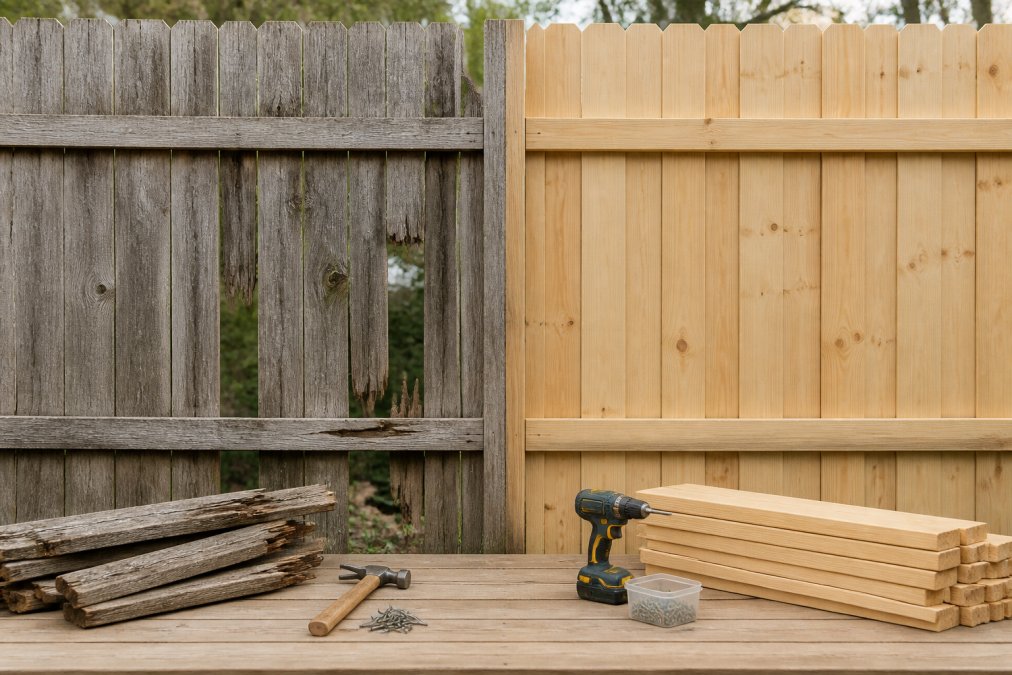
 comparison
Wood Fence Repair vs Replacement: 2026 Guide
Table of Contents
- When to Repair vs Replace Your Wood Fence
- Signs of Structural Fence Failure
- Assessing Fence Damage Severity
- Cost Comparison: Repair vs Full Replacement
- Cost of Fence Post Replacement
- Fence Replacement Cost Breakdown 2026
- Making Your Decision: Repair or Replace
- Conclusion
Last Updated: August 28, 2026
When to Repair vs Replace Your Wood Fence
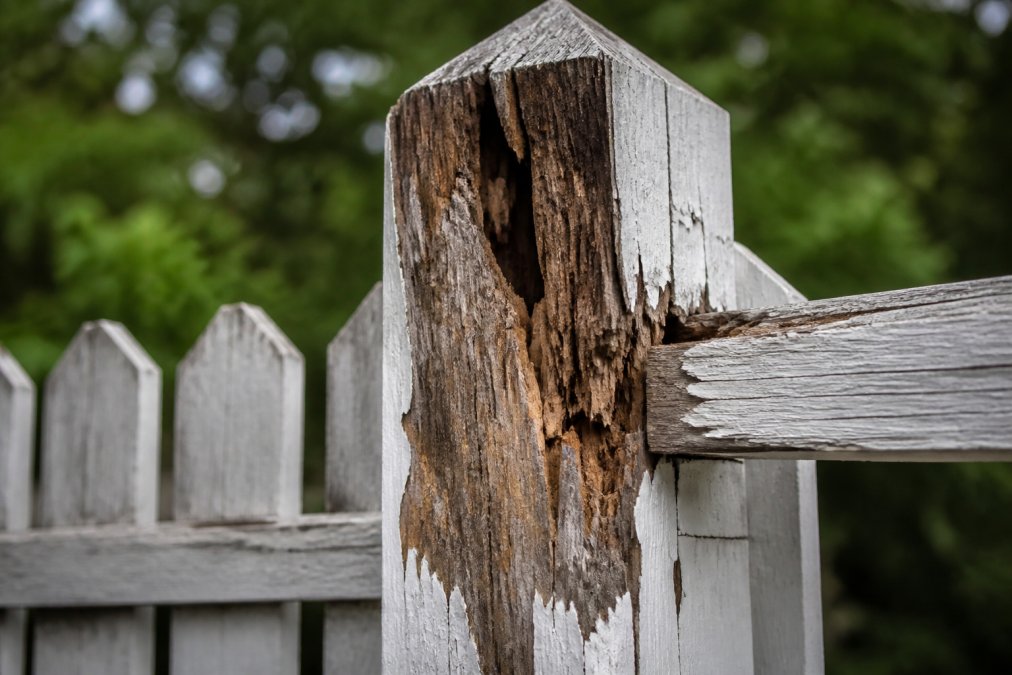
Deciding between wood fence repair vs full replacement is one of the most common questions homeowners face when their fence starts showing age. Most homeowners wait too long to make this decision, patching one problem then another until cumulative repair costs exceed what a full replacement would have cost from the start.
The real question isn't "Can I fix this?" but rather "Should I fix this?" A fence with 60% structural integrity and another decade of life ahead might be worth repairing. A fence that's 80% compromised, leaning visibly, and rotting from the inside out is almost certainly better replaced.
This guide walks you through the exact framework professionals use to make that call. You'll learn how to assess damage severity, calculate true costs, and understand when repair extends your fence's lifespan versus when it's just delaying inevitable replacement.
Signs of Structural Fence Failure
Structural fence failure accumulates through rot, weathering, and foundation instability that compounds over seasons. Recognizing these warning signs early is the difference between manageable repair and emergency replacement.
Common types of damage that signal replacement
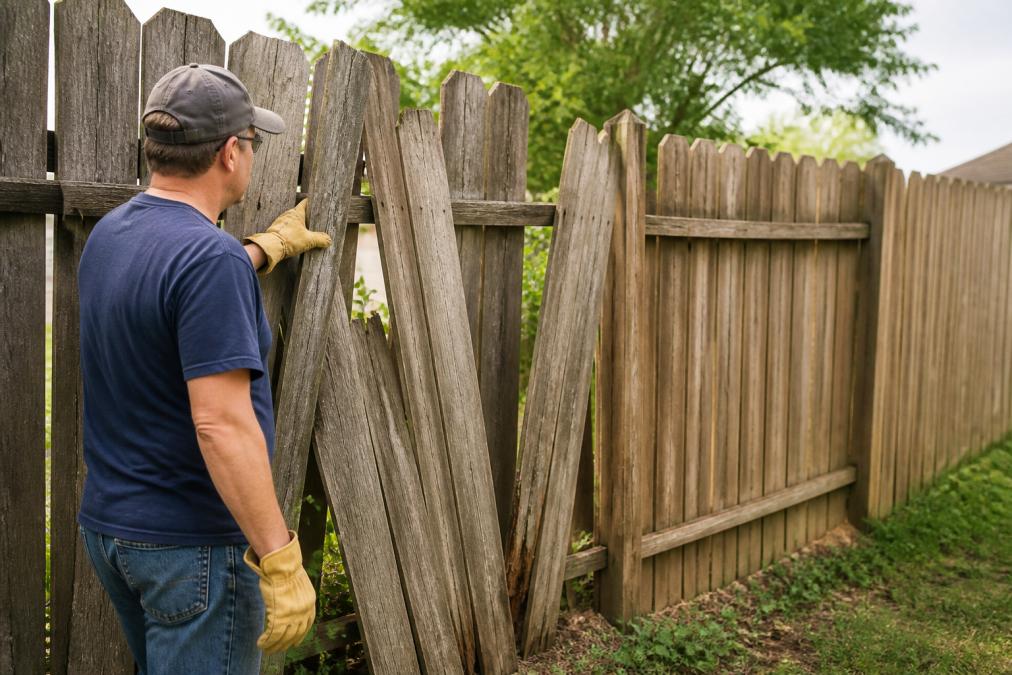
Rot and decay are the most serious indicators. If you press a screwdriver into the wood and it sinks more than a quarter-inch without resistance, the wood has lost structural integrity. Soft, spongy wood near the base of posts or along bottom rails means moisture has penetrated deep into the grain and spreads fast across multiple posts.
Leaning fences are failing fences. A slight lean signals that concrete footings have shifted, posts have weakened, or soil has eroded beneath them. Unlike cosmetic damage, structural lean gets worse each season without intervention.
Termite damage leaves telltale galleries and tunnels inside the wood. Once termites establish a colony, they compromise posts and rails rapidly. If damage is extensive, replacement is more cost-effective than targeted repairs.
Cracked or split boards across multiple sections indicate uneven drying or freeze-thaw stress. Multiple cracks across different pickets suggest the fence is aging past the point where cosmetic fixes help.
Loose or missing hardware compounds other damage. Rusted bolts, corroded brackets, and missing screws mean the fence's structural connections are compromised.
Assessing Fence Damage Severity
Not all damage is created equal. The difference between cosmetic wear and structural failure determines whether you repair or replace.
Structural integrity vs cosmetic damage
Structural damage affects the fence's ability to stand and resist wind. Posts that are rotting, leaning, or loose; rails that are cracked or sagging; and failed concrete footings all require professional attention or replacement.
Cosmetic damage includes weathering, fading, peeling paint, minor surface cracks, and discoloration. A fence with cosmetic damage looks tired but can stand for years. These issues are worth addressing for curb appeal but don't determine whether the fence is failing.
The critical distinction: if you can see daylight through gaps between posts and pickets, or if the fence moves noticeably when pushed, you're dealing with structural failure. If the fence is rigid but the paint is peeling, that's cosmetic.
The impact of fence age on longevity
Wood fence lifespan depends on wood species, climate, and maintenance. A well-maintained fence in a dry climate lasts 15-20 years. The same fence in a humid region with freeze-thaw cycles might fail in 8-12 years. Untreated wood fails faster, sometimes in 5-7 years.
If your fence approaches or has passed its expected lifespan for your climate, repair costs shift dramatically. You're extending life by 2-3 years at significant cost, then replacing it anyway. Younger fences under 10 years old are usually worth repairing unless damage is severe. Older fences approaching end-of-life are candidates for replacement, especially if multiple problems exist.
Cost Comparison: Repair vs Full Replacement
The decision ultimately comes down to economics. This section breaks down what you're actually paying for in each scenario.
Labor costs and material costs breakdown
Repair costs vary depending on what's broken. Replacing a single damaged post might cost several hundred to a thousand dollars in labor and materials. Replacing multiple posts, sections of rails, or pickets adds up fast. If you're fixing more than 30-40% of the fence, you're often approaching full replacement cost.
Material costs depend on wood species and quality. Pressure-treated lumber is more affordable than cedar or redwood. A full fence replacement includes labor to remove the old fence, install new posts with proper concrete footings, attach new rails and pickets, and finish the wood with stain or sealer.
Return on investment and long-term durability
A repaired fence lasting 5-7 years costs less upfront than a replacement lasting 15-20 years. But if you're staying long-term, replacement's longevity delivers better value per year of use.
Full replacement also lets you upgrade materials, add features like post caps, or adjust height or style. Those improvements add curb appeal and property value in ways patching an old fence never will.
Repairs make sense when the fence has 5+ years of useful life remaining and damage is localized. Replacement makes sense when the fence nears end-of-life, multiple problems exist, or you want a fence lasting the next decade.
Cost of Fence Post Replacement
Fence posts are the skeleton of your fence. When posts fail, the entire structure is compromised.
DIY vs professional installation
A single post replacement is one of the few repairs homeowners can tackle with basic tools and concrete experience. You'll dig out the old post, remove old concrete, set a new post plumb, and pour new concrete. The process takes several hours per post.
Professional installation ensures posts are perfectly plumb and properly set. Posts installed incorrectly will lean or fail prematurely. For multiple posts or difficult locations, professional installation is worth the cost.
Post repair alternatives like reinforcement kits
Before replacing a post entirely, reinforcement kits offer a middle-ground solution. The iToolMax Heavy Duty Fence Post Repair Kit uses an H-shaped steel stake driven alongside a leaning or rotting post to stabilize it without full replacement, saving up to 80% of replacement cost.
Reinforcement kits work best for posts that are leaning or showing early rot but still have structural integrity in upper sections. If the post is completely rotted through or broken at the base, full replacement is necessary.
The advantage is speed and cost. The disadvantage is you're extending a compromised post's life, not solving the underlying problem. A reinforced post might last 3-5 more years before needing full replacement.
Fence Replacement Cost Breakdown 2026
When replacement is the right choice, understanding cost components helps you budget accurately.
Material selection and budget planning
Wood species drives material cost. Pressure-treated lumber is most economical and resists rot effectively. Cedar and redwood cost more but offer superior aesthetics and natural rot resistance.
Fence height, length, and style all affect material costs. A 6-foot privacy fence uses more material than a 4-foot picket fence. Decorative elements like post caps or lattice panels add cost.
For accurate budgeting, measure your fence length and determine height and style. Contact California Crews / Painting & Fencing Modesto for a detailed estimate including materials, labor, and finishing work.
HOA and legal compliance considerations
Before replacing your fence, check local zoning regulations and HOA rules. Many jurisdictions have setback requirements dictating how far from the property line your fence must be (icma.org). Some areas limit residential fences to 6 feet in front yards and 8 feet in back yards.
HOA communities may require architectural approval before fence replacement and may specify approved materials, colors, or styles. Building permits are required in most jurisdictions. Contact California Crews / Painting & Fencing Modesto to discuss permit requirements and compliance as part of the replacement process.
Making Your Decision: Repair or Replace
This section consolidates everything into a clear decision framework.
Decision framework and cost-benefit analysis
Use this framework to decide:
-
Assess damage percentage. If under 20%, repair is usually right. Between 20-50%, you're in the gray zone. Over 50%, replacement is typically more economical.
-
Calculate fence age. If past 70% of expected lifespan, replacement is the smarter investment. If under 50%, repairs make sense.
-
Compare repair costs to replacement costs. If repair costs exceed 60% of replacement cost, replacement is usually better because you're paying most of the replacement price for a temporary fix.
-
Consider your timeline. If selling within 5 years, repair might suffice. If staying long-term, replacement's durability makes it the better investment.
-
Factor in maintenance. Repaired fences often require more frequent maintenance than new ones. If budget-conscious on maintenance, replacement reduces that burden.
Environmental sustainability and property value impact
Replacing an old, failing fence has environmental trade-offs. You're removing wood that could be salvaged, but you're investing in a fence lasting 15-20 years rather than requiring repeated repairs.
New fence installation can use sustainable materials. Responsibly sourced wood, recycled composite materials, or recycled plastic lumber offer environmental benefits. Discuss material options with California Crews / Painting & Fencing Modesto to balance durability, aesthetics, and environmental impact.
A new fence adds measurable curb appeal and property value. Real estate data shows fence replacement returns 50-80% of investment in resale value. A well-maintained, attractive fence signals the property is cared for and adds perceived security and privacy.
A failing fence forces a decision, but it doesn't have to be complicated. The framework in this guide, assessing damage, comparing costs, and evaluating your timeline, gives you clarity to choose repair or replacement with confidence.
If you're in the Modesto area and need a professional assessment, California Crews / Painting & Fencing Modesto offers free estimates including damage evaluation and clear recommendations. We handle everything from single-post repairs to full fence replacement, including permits, material selection, and finishing work. Get started with a consultation and let's determine whether your fence needs repair or replacement.
Frequently Asked Questions
Is it better to repair or replace a fence?
The choice depends on damage extent, fence age, and cost. Repair typically makes sense when damage is localized, the fence is younger than 15 years, and structural integrity remains sound. Full replacement is usually better when rot affects multiple posts, the fence leans significantly, or repairs would exceed 50% of replacement cost. Consider your long-term property plans and curb appeal goals when deciding.
What are the signs of structural fence failure?
Watch for leaning fence sections that don't straighten, visible rot or decay in fence posts and rails, cracked or split boards, loose or missing pickets, gate that no longer closes properly, and posts that shift when pushed. Termite damage, moisture damage from soil erosion, and severe weathering also signal structural problems. If multiple posts show damage or the fence sags, structural failure is likely and replacement is warranted.
How much does fence post replacement cost?
Professional fence post replacement varies based on post size, concrete footing depth, and local labor rates. Single post replacement typically costs more per post than bulk replacement. DIY options like fence post repair kits (approximately $30-$50 each) can save 80% compared to full professional post replacement. For exact pricing on professional installation, contact a local contractor for a quote specific to your fence damage and site conditions.
Will homeowners insurance cover fence repair or replacement?
Most standard homeowners insurance policies do not cover routine fence maintenance or gradual wear. However, damage from sudden events like storms, falling trees, or vandalism may be covered under your policy's dwelling or other structures coverage. Check your specific policy and file a claim within the required timeframe. Preventative maintenance like staining and sealing is your responsibility and affects long-term durability and property value.
How do I know if my wood fence is beyond repair?
A fence is typically beyond repair when rot affects the majority of posts, the fence leans more than 2 inches over its height, multiple rails are cracked or missing, or repairs would cost 50% or more of full replacement. Severe termite damage, foundation instability from soil erosion, and widespread weathering also indicate replacement is more cost-effective. Professional assessment helps determine whether targeted repairs or complete replacement offers better long-term durability and return on investment.
This article was written using GrandRanker
Frequently Asked Questions
Is it better to repair or replace a fence?
The choice depends on damage extent, fence age, and cost. Repair typically makes sense when damage is localized, the fence is younger than 15 years, and structural integrity remains sound. Full replacement is usually better when rot affects multiple posts, the fence leans significantly, or repairs would exceed 50% of replacement cost. Consider your long-term property plans and curb appeal goals when deciding.
What are the signs of structural fence failure?
Watch for leaning fence sections that don't straighten, visible rot or decay in fence posts and rails, cracked or split boards, loose or missing pickets, gate that no longer closes properly, and posts that shift when pushed. Termite damage, moisture damage from soil erosion, and severe weathering also signal structural problems. If multiple posts show damage or the fence sags, structural failure is likely and replacement is warranted.
How much does fence post replacement cost?
Professional fence post replacement varies based on post size, concrete footing depth, and local labor rates. Single post replacement typically costs more per post than bulk replacement. DIY options like fence post repair kits (approximately $30-$50 each) can save 80% compared to full professional post replacement. For exact pricing on professional installation, contact a local contractor for a quote specific to your fence damage and site conditions.
Will homeowners insurance cover fence repair or replacement?
Most standard homeowners insurance policies do not cover routine fence maintenance or gradual wear. However, damage from sudden events like storms, falling trees, or vandalism may be covered under your policy's dwelling or other structures coverage. Check your specific policy and file a claim within the required timeframe. Preventative maintenance like staining and sealing is your responsibility and affects long-term durability and property value.
How do I know if my wood fence is beyond repair?
A fence is typically beyond repair when rot affects the majority of posts, the fence leans more than 2 inches over its height, multiple rails are cracked or missing, or repairs would cost 50% or more of full replacement. Severe termite damage, foundation instability from soil erosion, and widespread weathering also indicate replacement is more cost-effective. Professional assessment helps determine whether targeted repairs or complete replacement offers better long-term durability and return on investment.